


The Arts of Buddhism | 8th–16th century
-
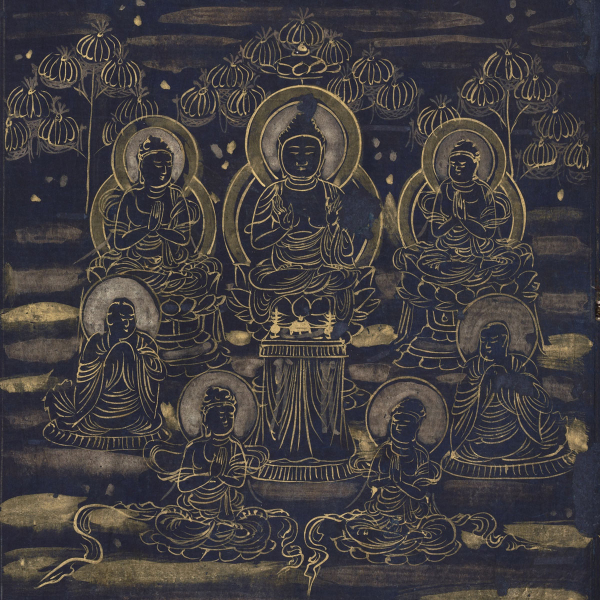
Volume 2 of the Great Tang Records on the Western Regions (From "Chūsonji Temple") (detail),
Heian period, 12th century (Important Cultural Property)Japanese Gallery (Honkan) Room 13
October 20, 2026 (Tue) - December 6, 2026 (Sun)The beliefs and arts of Buddhism, along with its followers, became more diverse over time. In the Heian period (794–1192), the emperor and court nobility practiced and supported Buddhism. They used their vast wealth to build temples and create images for worship, often in delicate styles reflecting their tastes.
In the Kamakura period (1192–1333), the samurai gained political power, also becoming patrons of Buddhism. They preferred Buddhist art that was clear and dynamic, which led artisans to develop new styles. Many common people also became followers of Buddhism at this time, blending this religion with local beliefs, especially in the Muromachi period (1392–1573).
During these centuries, monks brought new schools of Buddhist thought from China, and developed new schools in Japan based on older teachings. Buddhism also became more integrated with Shinto, the indigenous religion. The paintings, sculptures, ritual tools, and sacred calligraphy on display illustrate this diversity in Buddhism.
| Designation | Name | Creation/ Excavation/ Provenance |
Period | Acquisition/ Ownership/ Accession Number |
CMT | ||
| Highlight | Important Cultural Property | The Buddha Amida | By Eisen (born 1239) | Kamakura period, 1259 | Gift of Mr. Yasuda Zenjirō, C-508 | ||
| Highlight | Important Cultural Property | The Illustrated Biography of Prince Shōtoku | Kamakura period, 14th century | Lent by Myōanji Temple, Ibaraki | |||
| The Illustrated Biography of Prince Shōtoku | Nanbokuchō period, 14th century | Gift of Mr. Kawai Gyokudō, A-10429 | |||||
| Highlight | Important Cultural Property | Volume 1 of Illustrated Biography of the Virtuous Monk Shinran | Nanbokuchō period, 1344 | Lent by Shōganji Temple, Chiba | |||
| Highlight | Important Cultural Property | Volume 2 of the Great Tang Records on the Western Regions (From "Chūsonji Temple") | Heian period, 12th century | B-2441-2 | |||
| Highlight | Important Cultural Property | Buddhist Reliquary with a Flaming Jewel | Kamakura period, 13th–14th century | E-15502 | |||
| Highlight | Important Cultural Property | The Mandalas of the Two Realms | Kamakura period, 1194 | Lent by Tokumanji Temple, Ibaraki |