


縄文時代の暮らしの道具
-
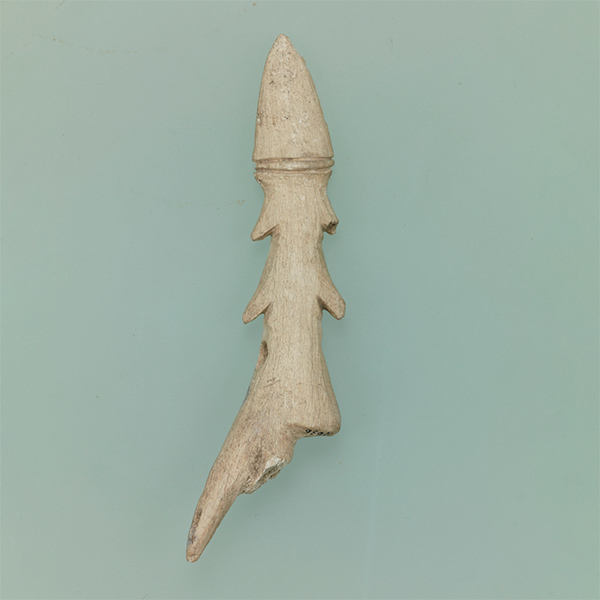
燕形銛頭
岩手県陸前高田市 中沢浜貝塚出土 縄文時代(晩期)・前1000~前400年 徳川頼貞氏寄贈平成館 考古展示室
2026年4月8日(水) ~ 2026年9月6日(日)縄文時代になると食料獲得のために採集・漁撈・狩猟が活発に行われ、そのためのさまざまな道具が用いられます。代表的な石器としては、狩猟具である石鏃、木工具である磨製石斧や土掘り具である打製石斧に加えて、粉食具である石皿や磨石などがあります。また、骨や角で作られた鏃・銛頭・ヤス状突刺具・釣針などの漁撈具の発達も見られます。
| 指定 | 名称 | 員数 | 作者・出土・伝来 | 時代・年代世紀 | 所蔵者・寄贈者・列品番号 | 備考 | |
| ヤス状刺突具 | 1個 | 茨城県つくばみらい市 神生貝塚出土 | 縄文時代(後期)・前2000~前1000年 | 徳川頼貞氏寄贈 J-10668 | |||
| ヤス状刺突具 | 1個 | 岩手県陸前高田市 獺沢貝塚出土 | 縄文時代(後~晩期)・前2000~前400年 | 徳川頼貞氏寄贈 J-16364 | |||
| 有孔ヤス状刺突具 | 1個 | 岩手県陸前高田市 中沢浜貝塚出土 | 縄文時代(後~晩期)・前2000~前400年 | 徳川頼貞氏寄贈 J-10635 | |||
| ヤス状刺突具未完成品 | 1個 | 岩手県陸前高田市 獺沢貝塚出土 | 縄文時代(後~晩期)・前2000~前400年 | 徳川頼貞氏寄贈 J-10807 | |||
| 鹿角製銛頭 | 1個 | 千葉県銚子市 余山貝塚出土 | 縄文時代(後期)・前2000~前1000年 | J-22578 | |||
| 有孔銛頭 | 1個 | 岩手県陸前高田市 獺沢貝塚出土 | 縄文時代(後~晩期)・前2000~前400年 | J-1461 | |||
| 有孔銛頭 | 1個 | 宮城県石巻市 沼津貝塚出土 | 縄文時代(後~晩期)・前2000~前400年 | 徳川頼貞氏寄贈 J-36714-C9-14 | |||
| 燕形銛頭 | 1個 | 宮城県石巻市 沼津貝塚出土 | 縄文時代(後~晩期)・前2000~前400年 | J-36714-C9-1 | |||
| おすすめ | 燕形銛頭 | 1個 | 岩手県陸前高田市 中沢浜貝塚出土 | 縄文時代(晩期)・前1000~前400年 | 徳川頼貞氏寄贈 J-10636 | ||
| 燕形銛頭 | 1個 | 岩手県陸前高田市 獺沢貝塚出土 | 縄文時代(後~晩期)・前2000~前400年 | 徳川頼貞氏寄贈 J-17334 | |||
| 燕形銛頭未完成品 | 1個 | 岩手県陸前高田市 獺沢貝塚出土 | 縄文時代(後~晩期)・前2000~前400年 | 徳川頼貞氏寄贈 J-17333 | |||
| 釣針 | 1個 | 岩手県陸前高田市 獺沢貝塚出土 | 縄文時代(晩期)・前1000~前400年 | 徳川頼貞氏寄贈 J-10624 | |||
| おすすめ | 釣針 | 1個 | 宮城県東松島市 響貝塚出土 | 縄文時代(後~晩期)・前2000~前400年 | J-36716-1 | ||
| 釣針 | 1個 | 青森県つがる市木造亀ヶ岡出土 | 縄文時代(晩期)・前1000~前400年 | 徳川頼貞氏寄贈 J-10623 | |||
| 釣針未完成品 | 1個 | 岩手県陸前高田市 獺沢貝塚出土 | 縄文時代(後~晩期)・前2000~前400年 | 徳川頼貞氏寄贈 J-10808 | |||
| 浮子 | 1個 | 青森県弘前市高杉出土 | 縄文時代(後~晩期)・前2000~前400年 | 徳川頼貞氏寄贈 J-10879 | |||
| 有溝土錘 | 1個 | 千葉市若葉区 加曽利貝塚出土 | 縄文時代(中~後期)・前3000~前1000年 | J-23246 | |||
| 管状土錘 | 2個 | 福島県鏡石町 旧岩瀬御料地内出土 | 縄文時代(後~晩期)・前2000~前400年 | J-4752 | |||
| 有溝土錘 | 1個 | 茨城県土浦市 小松貝塚出土 | 縄文時代(晩期)・前1000~前400年 | J-2039 | |||
| 土器片錘 | 1個 | 神奈川県横浜市 三ツ沢貝塚出土 | 縄文時代(後期)・前2000~前1000年 | ニール・ゴルドン・マンロー氏寄贈 J-13841-1 | |||
| 石錘 | 1個 | 神奈川県横浜市 三ツ沢貝塚出土 | 縄文時代(後期)・前2000~前1000年 | ニール・ゴルドン・マンロー氏寄贈 J-13835 | |||
| おすすめ | 石鏃 | 10個 | 長野県長和町和田出土 | 縄文時代(早~前期)・前7000~前3000年 | 龍野浦次郎寄贈 J-39497 | ||
| 鹿角製鏃 | 1個 | 岩手県陸前高田市 獺沢貝塚出土 | 縄文時代(後~晩期)・前2000~前400年 | 徳川頼貞氏寄贈 J-10655 | |||
| 根挟み | 1個 | 宮城県石巻市 沼津貝塚出土 | 縄文時代(後~晩期)・前2000~前400年 | J-36714-C9-30 | |||
| 弭形角器 | 1個 | 宮城県石巻市 沼津貝塚出土 | 縄文時代(後~晩期)・前2000~前400年 | 徳川頼貞氏寄贈 J-36714-C9-31 | |||
| 弭形角器 | 1個 | 千葉市若葉区 加曽利貝塚出土 | 縄文時代(後~晩期)・前2000~前400年 | 徳川頼貞氏寄贈 J-10683 | |||
| 石鋸 | 10個 | 長崎県五島市富江町出土 | 縄文時代(後期)・前2000~前1000年 | 小西元氏寄贈 J-9145 | |||
| 石錐 | 3個 | 京都市 北白川小倉町遺跡出土 | 縄文時代(前期)・前4000~前3000年 | 梅原末治氏・羽館易氏寄贈 J-22732 | |||
| おすすめ | 牙製錐 | 1個 | 東京都板橋区小豆沢四丁目 小豆沢貝塚出土 | 縄文時代(後~晩期)・前2000~前400年 | 田村徳氏寄贈 J-38853-C56-2 | ||
| 骨針 | 1個 | 宮城県石巻市 沼津貝塚出土 | 縄文時代(後~晩期)・前2000~前400年 | J-36714-C9-47 | |||
| 石匙 | 1個 | 北海道函館市出土 | 縄文時代(早期)・前7000~前4000年 | J-5224 | |||
| 石匙 | 1個 | 秋田県美郷町六郷石名館出土 | 縄文時代(後~晩期)・前2000~前400年 | J-36594 | |||
| へら状骨器 | 1個 | 岩手県陸前高田市 獺沢貝塚出土 | 縄文時代(後~晩期)・前2000~前400年 | 徳川頼貞氏寄贈 J-10825 | |||
| 石箆 | 1個 | 青森県つがる市木造亀ヶ岡出土 | 縄文時代(後~晩期)・前2000~前400年 | 徳川頼貞氏寄贈 J-15905 | |||
| 石箆 | 1個 | 青森県つがる市木造亀ヶ岡出土 | 縄文時代(後~晩期)・前2000~前400年 | 徳川頼貞氏寄贈 J-15907 | |||
| 磨製石斧 | 1個 | 岩手県奥州市水沢佐倉河一本木出土 | 縄文時代(早~前期)・前7000~前3000年 | J-14121 | |||
| 打製石斧 | 1個 | 神奈川県横浜市 三ツ沢貝塚出土 | 縄文時代(後期)・前2000~前1000年 | ニール・ゴルドン・マンロー氏寄贈 J-13857 | |||
| 打製石斧 | 1個 | 神奈川県横浜市 三ツ沢貝塚出土 | 縄文時代(後期)・前2000~前1000年 | ニール・ゴルドン・マンロー氏寄贈 J-13850 | |||
| 打製石斧 | 1個 | 神奈川県横浜市 三ツ沢貝塚出土 | 縄文時代(後期)・前2000~前1000年 | ニール・ゴルドン・マンロー氏寄贈 J-13851 | |||
| スタンプ形石器 | 1個 | 新潟県長岡市中潟町出土 | 縄文時代(早期)・前7000~前4000年 | 星野良氏寄贈 J-38611-1 | |||
| 北海道式石冠(磨石) | 1個 | 青森県つがる市森田町出土 | 縄文時代(中期)・前3000~前2000年 | J-36842 | |||
| おすすめ | 脚付石皿 | 1個 | 青森県佐井村出土 | 縄文時代(後期)・前2000~前1000年 | 平井臣親氏寄贈 J-39395 |