


宮廷の美術―平安~室町
-
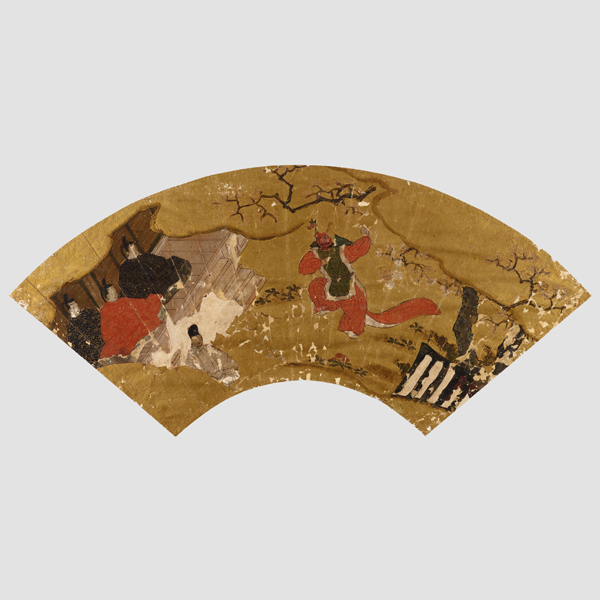
源氏物語図扇面(御法)
室町時代・16世紀本館 3室
2024年7月2日(火) ~ 2024年8月18日(日)平安から室町時代の美術にはそもそも宮廷貴族が強く関与し、その好尚を反映したものが多く、日本美術史に果たした貴族の役割はきわめて大きいものがありました。宮廷貴族の手によってつちかわれたやまと絵や書の作品、そして宮廷貴族の調度品として用いられた工芸品は後代まで強い影響力をもち、日本美術の重要な位置を占めています。
ここでは、平安から室町までの宮廷に源を発する美術の世界をご覧いただきます。
今回は、『源氏物語』を描いた扇面や写本、装飾料紙を使った古筆などをご紹介します。
| 指定 | 名称 | 員数 | 作者・出土・伝来 | 時代・年代世紀 | 所蔵者・寄贈者・列品番号 | 備考 | |
| 源氏物語図扇面(空蝉) | 1面 | 室町時代・16世紀 | A-346-1 | ||||
| 重文 | 源氏物語 (空蝉) | 1帖 | 伝飛鳥井雅綱筆 | 室町時代・15~16世紀 | B-3183-3 | ||
| 源氏物語図扇面(夕顔) | 1面 | 室町時代・16世紀 | A-346-6 | ||||
| 重文 | 源氏物語 (夕顔) | 1帖 | 室町時代・15~16世紀 | B-3183-4 | |||
| 源氏物語図扇面(蓬生) | 1面 | 室町時代・16世紀 | A-346-5 | ||||
| 重文 | 源氏物語 (蓬生) | 1帖 | 室町時代・15~16世紀 | B-3183-15 | |||
| 源氏物語図扇面(薄雲) | 1面 | 室町時代・16世紀 | A-346-2 | ||||
| 重文 | 源氏物語 (薄雲) | 1帖 | 伝慈鎮筆 | 鎌倉時代・13世紀 | B-3183-19 | ||
| 源氏物語図扇面(梅枝) | 1面 | 室町時代・16世紀 | A-346-3 | ||||
| 重文 | 源氏物語 (梅枝) | 1帖 | 鎌倉時代・13世紀 | B-3183-32 | |||
| おすすめ | 源氏物語図扇面(御法) | 1面 | 室町時代・16世紀 | A-346-4 | |||
| おすすめ | 重文 | 源氏物語 (御法) | 1帖 | 鎌倉時代・13世紀 | B-3183-40 | ||
| おすすめ | 重美 | 大字和漢朗詠集切 | 1幅 | 伝藤原行成筆 | 平安時代・11世紀 | 森田竹華氏寄贈 B-2989 | |
| おすすめ | 本阿弥切 | 1幅 | 伝小野道風筆 | 平安時代・11~12世紀 | B-2446 | ||
| 和漢朗詠集断簡(長谷切) | 1幅 | 藤原教長筆 | 平安時代・12世紀 | B-2501 | |||
| 業平集断簡(砂子切) | 1幅 | 伝藤原公任筆 | 平安時代・12世紀 | 髙木聖雨氏寄贈 B-3545 | |||
| 石山切(貫之集下) 身をなけきて | 1幅 | 藤原定信筆 | 平安時代・12世紀 | 柳澤敬素氏寄贈 B-3246 | |||
| 小色紙 | 1幅 | 伝藤原公任筆 | 平安時代・12世紀 | 森田竹華氏寄贈 B-2990 | |||
| 水草双鳥鏡 | 1面 | 鎌倉時代・13世紀 | E-18339 | ||||
| 片輪車双鳥鏡 | 1面 | 鎌倉時代・13世紀 | E-18319 |