Jump to content

Theatrical Masks of Animals

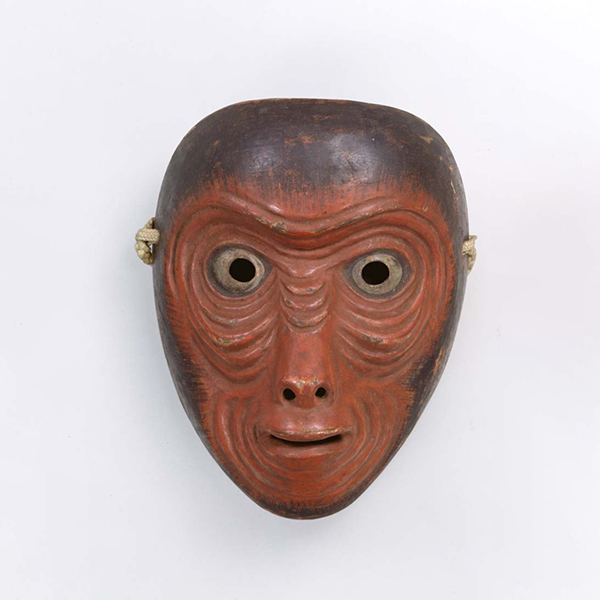
  • Image of "Kyōgen Mask: SaruMuromachi–Azuchi–Momoyama period, 16th century"

    Kyōgen Mask: Saru
    Muromachi–Azuchi–Momoyama period, 16th century

    Japanese Gallery (Honkan) Room 14
    August 26, 2025 (Tue) - November 9, 2025 (Sun)

    In its long history, Japan has seen a blossoming of a range of performing arts in which performers would put on masks. They include gigaku, a Buddhism-related performing art that entered the country during the Asuka period (593–710) via continental Asia; bugaku, which developed as a masked theatrical performance of the imperial court; and noh and kyōgen, which were perfected in the Muromachi period (1392–1573).

    Among various masks used for these traditional performing arts of Japan, masks representing animals are especially remarkable. This exhibition presents a variety of animal-themed masks used for traditional Japanese performing arts. We hope that these distinctively featured masks of animals will give you a glimpse into how people of the past observed animals.

Major works in this exhibition

* Works listed below are in the TNM Collection unless otherwise indicated.

Bugaku Mask: Korobase, Heian period, 1042, Lent by Tamukeyama Hachimangū Shrine, Nara (Important Cultural Property)

Bugaku Mask: Ryō'ō, Kamakura period, 1211, Lent by Masumida Shrine, Aichi (Important Cultural Property)

Noh Mask: Dei no Kotobide, Passed down by the Konparu Troupe, Muromachi period, 15th–16th century (Important Cultural Property)

Kyōgen Mask: Saru, Muromachi–Azuchi-Momoyama period, 16th century

Kyōgen Mask: Usobuki, Azuchi-Momoyama–Edo period, 16th–17th century


Pamphlet

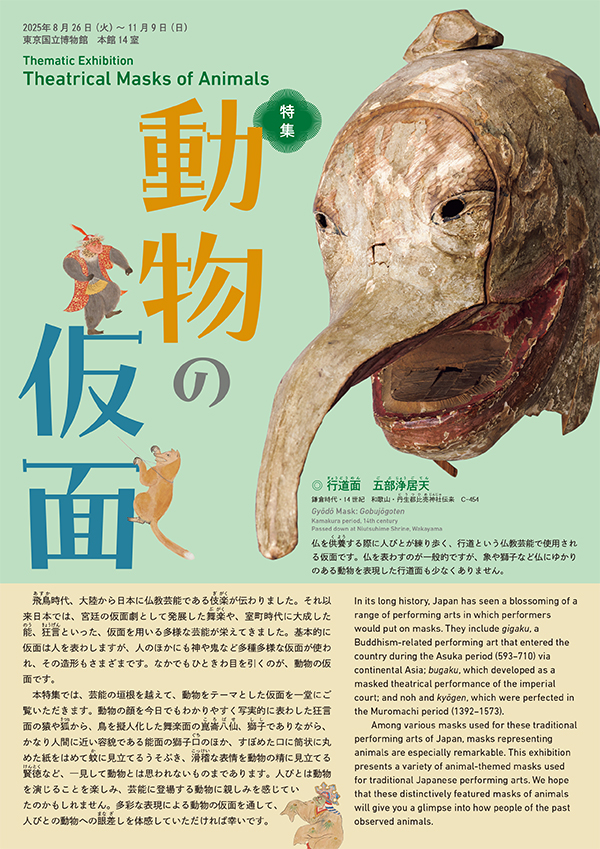
動物の仮面

Thematic Exhibition
Theatrical Masks of Animals

Copies are available in the gallery during the exhibition period, while stocks last.
PDF3.2MB)