
Jump to content

Floral Motifs in Buddhism
Lotus and Hōsōge Flowers

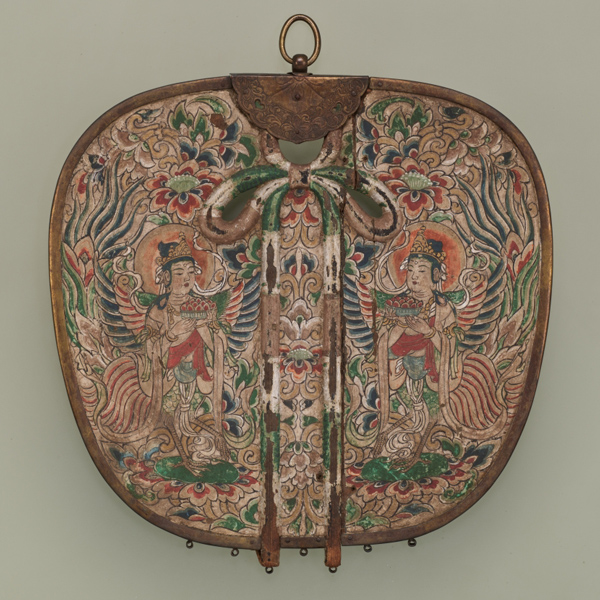
  • Image of "“Flower Garland” with KalaviṅkaFormerly passed down at Niutsuhime Shrine, Wakayama, Muromachi period, 16th century (Important Cultural Property)"

    “Flower Garland” with Kalaviṅka
    Formerly passed down at Niutsuhime Shrine, Wakayama, Muromachi period, 16th century (Important Cultural Property)

    Upcoming

    Japanese Gallery (Honkan) Room 4
    June 23, 2026 (Tue) - August 30, 2026 (Sun)

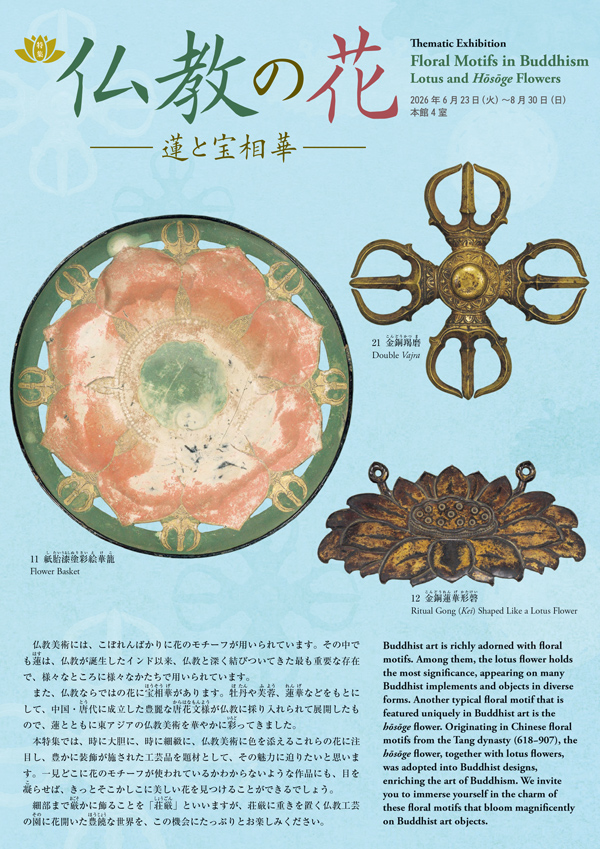
    Buddhist art is richly adorned with floral motifs. Among them, the lotus flower holds the most significance, appearing on many Buddhist implements and objects in diverse forms.
     
    Another typical floral motif that is featured uniquely in Buddhist art is the hōsōge flower. Originating in Chinese floral motifs from the Tang dynasty (618-907), the hōsōge flower, together with lotus flowers, was adopted into Buddhist designs, enriching the art of Buddhism.
     
    We invite you to immerse yourself in the charm of these floral motifs that bloom magnificently on Buddhist art objects.
Major works in this exhibition

* Works listed below are in the TNM Collection unless otherwise indicated.

Flower Basket with Hōsōge Floral Vines, Heian period, 12th century (National Treasure, Lent by Jinshōji Temple, Shiga)

Sutra Box with a Dragon Coiled around a Sword, Heian period, 12th century (National Treasure, Lent by the Inner Sanctuary, Taimadera Temple, Nara)

Buddhist Reliquary with a Flaming JewelKamakura period, 13th–14th century (Important Cultural Property)

Ritual Gong (Kei) with Lotus Vines, Heian period, 12th century (National Treasure, Lent by Zenrinji Temple, Kyoto)

Flower BasketKamakura period, 13th century

Stupa-Shaped Buddhist Reliquary for a Wish-Granting Jewel, Kamakura period, 13th century (National Treasure, Lent by Chōfukuji Temple, Nara)

“Flower Garland” with Kalaviṅka, Formerly passed down at Niutsuhime Shrine, Wakayama, Muromachi period, 16th century (Important Cultural Property)