


The Arts of the Imperial Court | 8th–16th century
-
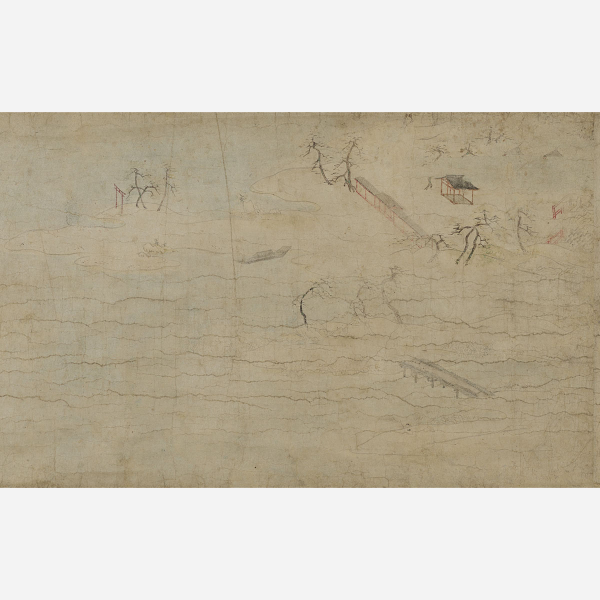
"The Gods of Sumiyoshi Shrine" from The Thirty-Six Immortal Poets (Satake Version)(detail)
Kamakura period, 13th century (Important Cultural Property, Gift of Mr. Matsunaga Yasuzaemon)Japanese Gallery (Honkan) Room 13
July 14, 2026 (Tue) - August 30, 2026 (Sun)After emulating China for generations, the imperial court began to develop its own cultural identity around the 10th century. This movement was led by the court nobility serving the emperor. The body of work they produced — literature, calligraphy, painting, and elegantly decorated items for daily use — became one of Japan’s cultural foundations.
Even after the samurai gained more political power than the court in the 12th century, the court remained the home of high culture for centuries. The different art forms of the court were closely related, with literature playing a central role. Previously the nobility wrote in Chinese, but the creation of a new writing system (kana) helped Japanese literature to flourish. Both noblemen and noblewomen wrote some of Japan’s most celebrated poetry and stories, including by the court lady Murasaki Shikibu. Scenes from literature were also shown in paintings and on furnishings, which the nobility commissioned for their mansions.
| Designation | Name | Creation/ Excavation/ Provenance |
Period | Acquisition/ Ownership/ Accession Number |
CMT | ||
| Highlight | Important Cultural Property | "The Gods of Sumiyoshi Shrine" from The Thirty-Six Immortal Poets (Satake Version) | Kamakura period, 13th century | Gift of Mr. Matsunaga Yasuzaemon, A-10570 | |||
| Highlight | Important Cultural Property | The Poet Kakinomoto no Hitomaro | Attributed to Takuma Eiga; inscription by Shōkai Reiken (1315–1396) | Nanbokuchō–Muromachi period, 14th century | Lent by the Tokiwayama Bunko Foundation, Tokyo | ||
| Highlight | Important Art Object | Volume One of the Album of Exemplary Calligraphy, Named "Hama Chidori (Provers by the Waterside)" | Nara–Edo period, 8th–17th century | Private collection | |||
| Highlight | Important Art Object | Volume Two of the Album of Exemplary Calligraphy, Named "Hama Chidori (Provers by the Waterside)" | Nara–Edo period, 8th–17th century | Private collection |