


Painting and Calligraphy | 16th–19th century
-
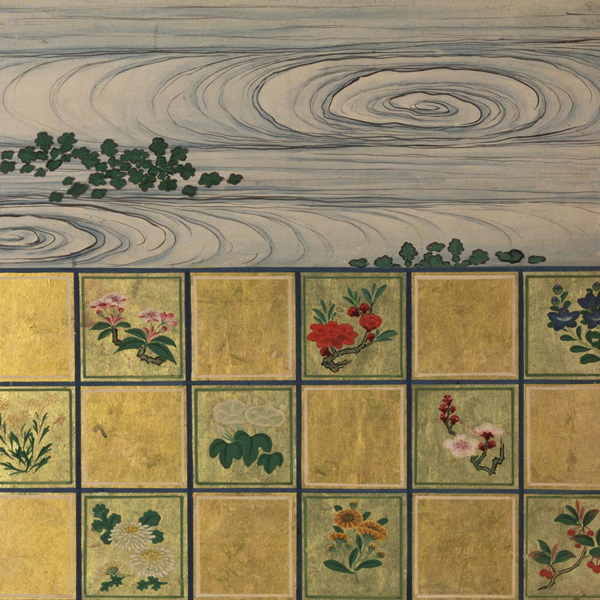
Flowering Plants and Flowing Water (detail)
By Kanō Sansetsu (1590–1651), Edo period, 17th centuryJapanese Gallery (Honkan) Room 18
May 26, 2026 (Tue) - July 12, 2026 (Sun)A thriving economy, foreign trade, and better education invigorated the development of painting and calligraphy. Previously, ruling classes like the samurai and court nobility were the main patrons of art. But in the Edo period (1603–1868), more people started to benefit from the economy. Successful merchants in particular gained the wealth to support artists and buy their works.
Many painters continued working in traditional styles, while others started looking to outside sources for inspiration. Paintings and painting manuals imported from China were one source. Another was the books and prints that traders brought from Europe, which showed techniques like realistic shading and perspective. As a result, painting in Japan became more diverse in style and subject matter.
Meanwhile, the ancient custom of writing with a brush and ink continued. The literacy rate increased dramatically as schools for different social classes were established, particularly in cities and towns. The publishing industry thrived and more people took up the art of calligraphy.
| Designation | Name | Creation/ Excavation/ Provenance |
Period | Acquisition/ Ownership/ Accession Number |
CMT | ||
| Highlight | Flowering Plants and Flowing Water | By Kanō Sansetsu (1590–1651) | Edo period, 17th century | A-12089-2 | |||
| Highlight | Calligraphy in One Line | By Date Masamune (1567–1636) | Edo period, 17th century | Gift of Mr. Sugiyama Tōichi, B-3173 | |||
| Highlight | The Noh Play Takasago with a Waka Poem | By Ike no Taiga (1723–1776) | Edo period, 18th century | Gift of Ms. Kuze Tamie, B-3409 | |||
| Waterfall with a Waka Poem | By Sengai Gibon (1750–1837) | Edo period, 1827 | Gift of Ms. Kuze Tamie, B-3411 |