


Ceramics
-
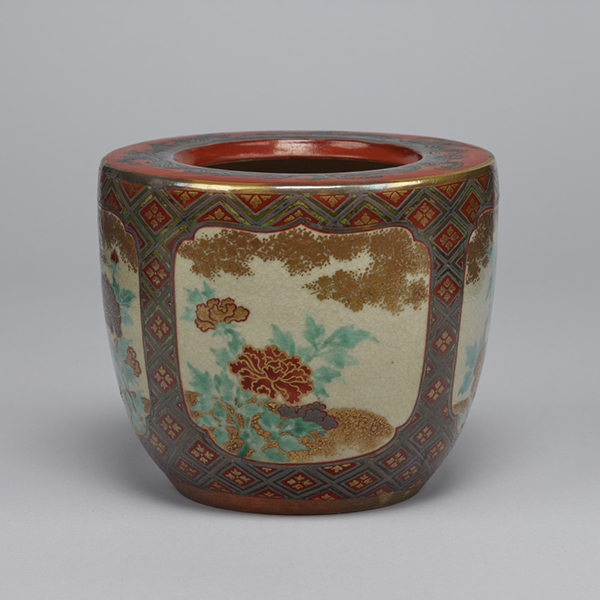
Water Jar with Peonies
Studio of Ninsei, Edo period, 17th century (Important Cultural Property)Japanese Gallery (Honkan) Room 13
January 1, 2026 (Thu) - March 8, 2026 (Sun)Early Japanese ceramics were heavily influenced by techniques and processes originating in China and Korea. Over time, a more diverse range of forms and styles came to be embraced in Japan. This increased diversity was driven by economic and political factors, including foreign trade and the changing preferences of disparate social classes.
Throughout Japanese history, people of different social classes—emperors, nobles, samurai, and townspeople like merchants—held political or economic power at different times. Potters responded by creating regionally distinct ceramics that met the needs and tastes of each set of clientele.
This gallery traces the history of Japanese ceramics from around the 12th century onwards, beginning with storage jars for daily use, which highlight the unique colors and textures of local clays. It continues with tea bowls and other utensils for the tea ceremony, a practice that greatly influenced ceramic production. The ceramic traditions of Kyoto are then presented, followed by porcelain made in Arita, and other works from regional kilns.
| Designation | Name | Creation/ Excavation/ Provenance |
Period | Acquisition/ Ownership/ Accession Number |
CMT | ||
| Important Cultural Property | Wide-Mouthed Storage Jar with Peony Vines | Seto ware | Kamakura period, 14th century | G-344 | |||
| Tea Bowl, Named “Hashihime (Princess of the Bridge)” | Mino ware, Shino style | Azuchi-Momoyama–Edo period, 16th–17th century | Gift of Mr. Matsunaga Yasuzaemon, G-4830 | ||||
| Fan-Shaped Food Cups (Mukōzuke) | Mino ware, Oribe style | Edo period, 17th century | G-5760 | ||||
| Shallow Bowl with a Flower | Mino ware, Yellow Seto style | Azuchi-Momoyama–Edo period, 16th–17th century | Gift of Mr. Hirota Matsushige, G-5311 | ||||
| Highlight | Important Cultural Property | Water Jar, Named "Shiba no Iori (Grass Hut)" | Shigaraki ware | Azuchi-Momoyama–Edo period, 16th–17th century | Gift of Mr. Hirota Matsushige, G-5307 | ||
| Highlight | Important Cultural Property | Bowl with a Wagtail | Mino ware, Gray Shino style | Azuchi-Momoyama–Edo period, 16th–17th century | G-5730 | ||
| Highlight | Important Cultural Property | Square Dish with a Chinese Poet Watching Seagulls | By Ogata Kōrin (1658–1716) and Ogata Shinsei (1663–1743) | Edo period, 18th century | G-32 | ||
| Highlight | Important Cultural Property | Water Jar with Peonies | Studio of Ninsei | Edo period, 17th century | G-303 | ||
| Large Bowl with a Tiger and Bamboo | Imari ware | Edo period, 17th century | Gift of Mr. Sakamoto Katsuji, G-5886 | ||||
| Highlight | Important Cultural Property | Sake Pitcher with Lions and Peonies | Imari ware | Edo period, 17th century | Lent by the Agency for Cultural Affairs | ||
| Large Dish with Flowers | Imari ware | Edo period, 18th century | Gift of Dr. Yokogawa Tamisuke, G-1059 |