


Indian Miniature Paintings
-
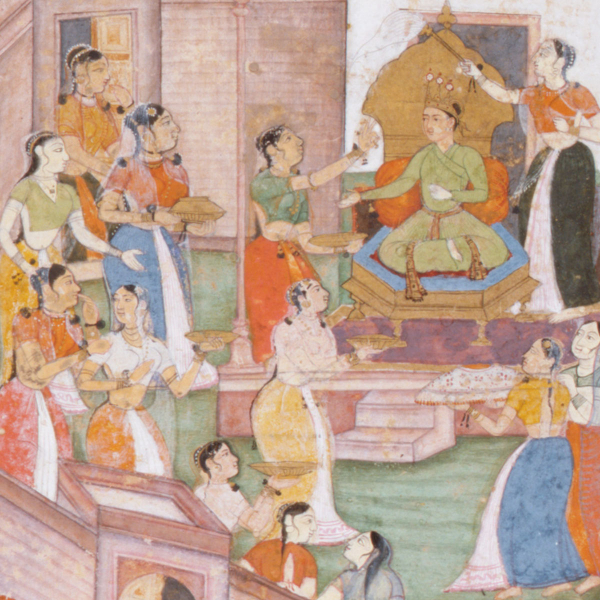
Folio from a Razmnama Manuscript (detail)
By the Mughal school, India, End of the 16th centuryAsian Gallery (Toyokan) Room 13-2 & 13-3
October 27, 2026 (Tue) - November 29, 2026 (Sun)Miniature paintings in India began around the 11th century as illustrations for sutras of Buddhism and Jainism. Until around the 16th century, Buddhist miniature paintings were mostly produced in eastern India, while Jainist ones were mainly created in western India. Other styles flourished in the following period, including Mughal paintings, which were realistic portrayals of secular subjects related to kings, princes and nobles in their lives at the royal court of the Mughal dynasty. Another major genre was Rajput paintings, which came under the auspices of kings and princes of the Rajput kingdoms of northwestern India and were popularly themed on the teachings of Hinduism.
Indian miniature paintings established a uniquely meticulous, colorful, and passionate style, with various painting schools. Another appealing aspect of these paintings is the abundance of elements vividly contained inside each picture, such as myths, music, and nature.
| Designation | Name | Creation/ Excavation/ Provenance |
Period | Acquisition/ Ownership/ Accession Number |
CMT | ||
| Highlight | Folio from a Razmnama Manuscript | By the Mughal school, India | End of the 16th century | TA-647-2 | |||
| Highlight | Hanuman Meets with Rama (Ramayana) | By the Mewar school, India | First half of the 17th century | TA-647-47 | |||
| Highlight | Rana Hammir Leaving Ranthambore Fort for Battle | By the Kangra school, India | End of the 18th century | TA-647-169 |