


Sculptures from Southeast Asia
-
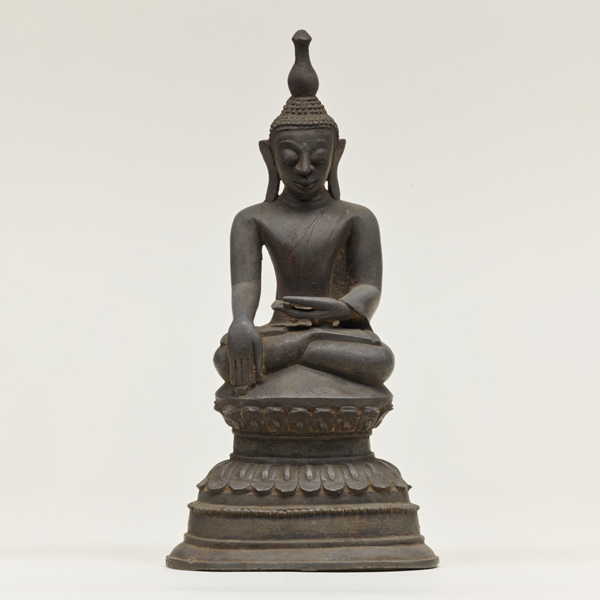
The Buddha
Myanmar, Konbaung dynasty, 18th century (Gift of Imaizumi Yūsaku)Asian Gallery (Toyokan) Room 12
April 8, 2026 (Wed) - October 18, 2026 (Sun)This section presents religious sculptures from Southeast Asia, a major crossroads of trade between East and West. In the fourth century, the seafaring peoples of this region began to utilize the monsoon winds for maritime navigation. Trade routes known as the Maritime Silk Roads flourished, propelling the exchange of goods, religious beliefs, concepts of kingship, and artistic styles.
As the region became more interconnected, sacred images from India stimulated the production of religious imagery throughout Southeast Asia. People subsequently adapted these images within their respective belief systems and social contexts.
Southeast Asian religious sculpture takes Indian art as its prototype in many respects, but it was also shaped by the distinctive aesthetics of each region. The objects of veneration varied by period and place. However, the mutual influence of Buddhism and Hinduism, expressed visually in religious sculpture, is one of the defining characteristics of Southeast Asian art.
| Designation | Name | Creation/ Excavation/ Provenance |
Period | Acquisition/ Ownership/ Accession Number |
CMT | ||
| Highlight | Head of the Crowned Buddha | Ayutthaya period, 16th–17th century | Gift of Mr. Miki Sakae, TC-74 | ||||
| Highlight | Boundary Stone with a Man, Woman, and Vase of Abundance | Thailand | Dvaravati period, 8th–10th century | Gift of Mr. Yamamoto Tatsurō, TC-789 | |||
| Highlight | Bust of a Lion | Vietnam | Champa period, 10th century | Gift of Dr. Yamamoto Tatsuro, TC-799 | |||
| Highlight | The Horse-Headed God Vājimukha | Cambodia or Thailand | Pre-Angkor period, 7th–8th century | Gift of Dr. Yamamoto Tatsurō, TC-795 | |||
| Highlight | The Buddha Mahāvairocana | Indonesia | Ca. 10th century | TC-709 | |||
| Highlight | The Buddha | Myanmar | Konbaung dynasty, 18th century | Gift of Imaizumi Yūsaku, TC-68 | |||
| Highlight | Bust of Śiva | Cambodia, Acquired through exchange with the French School of the Far East | Angkor period, 9th century | TC-391 |