


The Art of Ukiyo–e | 17th–19th century
-
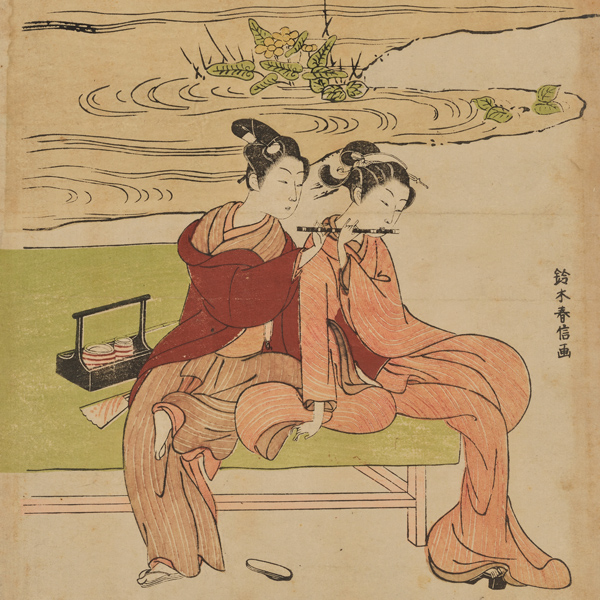
Allusion to Emperor Xuanzong and Yang Guifei (detail)
By Suzuki Harunobu (possibly 1725–1770), Edo period, 18th centuryJapanese Gallery (Honkan) Room 20
June 16, 2026 (Tue) - July 20, 2026 (Mon)Prints and paintings called ukiyo-e were the first genre of art enjoyed by common people on a large scale. Economic growth contributed to the creation of this genre in the 17th century. As living standards improved, common people developed an urban culture that was passionate about trends, fashion, and entertainment.
At first, ukiyo-e depicted the celebrities of the day, especially actors of the kabuki theater and courtesans of the pleasure quarters (the legal brothel district). The subject matter later expanded to include topics like seasonal festivals, travel spots, and landscapes.Techniques for making ukiyo-e also changed over time. Early ukiyo-e were painted by hand. Artisans later started carving images into blocks of wood and used these blocks to print ukiyo-e in large numbers. These black-and-white prints were much more affordable. As carving and printing techniques were refined, prints with a brilliant range of colors became possible.
| Designation | Name | Creation/ Excavation/ Provenance |
Period | Acquisition/ Ownership/ Accession Number |
CMT | ||
| Highlight | Allusion to Emperor Xuanzong and Yang Guifei | By Suzuki Harunobu (possibly 1725–1770) | Edo period, 18th century | A-10569-1309 | |||
| Allusion to the "Yatsuhashi" Chapter from Tales of Ise | By Suzuki Harunobu (possibly 1725–1770) | Edo period, 18th century | A-10569-1329 | ||||
| Highlight | Perspective Picture of the Diving Woman Stealing the Jewel from the Dragon Palace | By Okumura Masanobu (1686–1764) | Edo period, 18th century | A-10569-889 |