


Sculpture
-
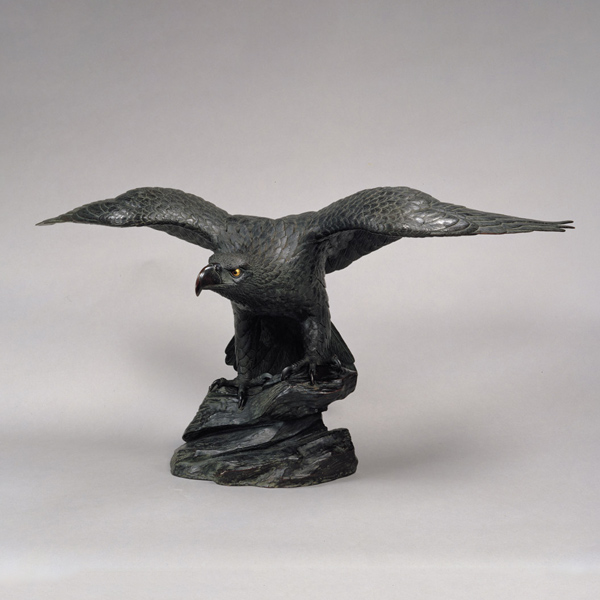
Eagle
By Suzuki Chōkichi (1848–1919), Meiji era, 1892 (Important Cultural Property, Gift of Japan Delegate Office for World's Columbian Exposition, Chicago)Japanese Gallery (Honkan) Room 8
April 21, 2026 (Tue) - July 26, 2026 (Sun)Japan has three main traditions of sculpture: Buddhist deities, Shinto deities, and portraits of people. Buddhism was introduced to Japan from the Korean Peninsula in the 6th century, together with sculptures of Buddhist deities. These sculptures were made primarily for worship. Making a sculpture was also an “act of spiritual merit” that would help one’s prayers to be answered.
In contrast, Shinto is the indigenous religion of Japan. Since ancient times, people believed that Shinto deities dwell in natural features like mountains and rivers, and rarely depicted them as humanlike sculptures. Even when a Shinto shrine had a sculpture for worship, the priests usually kept it hidden from view out of respect.Some portrait sculptures were also worshipped, as they showed deified monks or samurai. Others were made to remember the dead and pray for their salvation. This gallery features works mainly from the Heian (794–1192) and Kamakura (1192–1333) periods, when many of Japan’s most admired sculptures were created.
| Designation | Name | Creation/ Excavation/ Provenance |
Period | Acquisition/ Ownership/ Accession Number |
CMT | ||
| Highlight | Peafowls | By Taki Katei (1832–1901) | Meiji era, 1892 | Gift of Japan Delegate Office for World's Columbian Exposition, Chicago, A-156 | On exhibit through June 7, 2026 | ||
| Highlight | Waterfall | By Shibata Zeshin (1807–1891) | Meiji era, 1874 | A-368 | On exhibit from June 9, 2026 | ||
| Highlight | Important Cultural Property | Eagle | By Suzuki Chōkichi (1848–1919) | Meiji era, 1892 | Gift of Japan Delegate Office for World's Columbian Exposition, Chicago, E-13034 | ||
| Plaque with Monkeys Playing with a Mantis | By Kagawa Katsuhiro (1853–1917) | Meiji era, 1892 | Gift of Japan Delegate Office for World's Columbian Exposition, Chicago, E-12754 | ||||
| Highlight | Jar with a Pair of Phoenixes | By Kinkōzan Sōbei Vll (1868–1928) | Meiji era, 1892 | Gift of the Japanese Delegate's Office for the World's Columbian Exposition, Chicago, G-125 |