


Dogū: Objects of Prayer in the Jomon Period
-
Spouted Vessel with Human Figure Ornaments
Found in Hokuto City, Hokkaido, Previously owned by Ochiai Haruhiko, Jōmon period, 2000–1000 BC (Important Cultural Property, On exhibit from October 28, 2025)Japanese Archaeology and Special Exhibition (Heiseikan) Japanese Archaeology Gallery
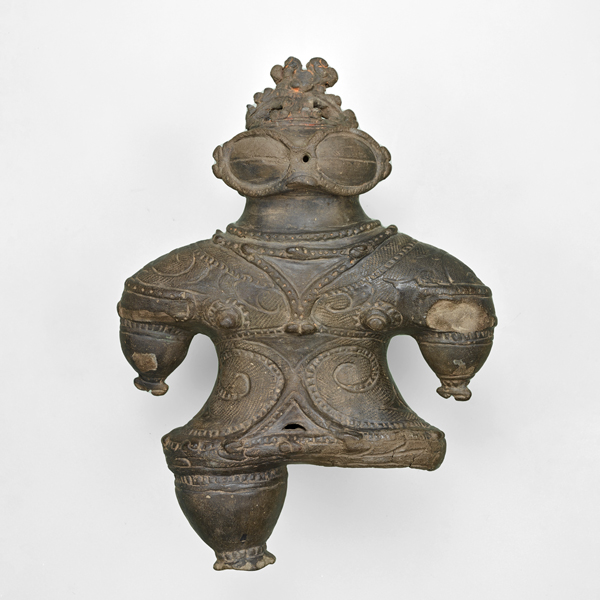
September 9, 2025 (Tue) - February 1, 2026 (Sun)The most prominent objects of prayer from the Jomon period (ca. 11,000 BC–ca. 5th century BC) are dogu clay figurines. Even the earliest examples of these figurines have breasts, which suggests that they represent women, and their protruding bellies probably symbolize pregnancy. Therefore, it is believed that dogu figurines were created to pray for easy delivery of children, the birth of many children, and fertility.
| Designation | Name | Creation/ Excavation/ Provenance |
Period | Acquisition/ Ownership/ Accession Number |
CMT | ||
| Highlight | Important Cultural Property | Figurine ("Dogū") with Goggle-Like Eyes | Found in Tsugaru City, Aomori | Jōmon period, 1000–400 BC | J-38392 | On exhibit through October 26, 2025 | |
| Highlight | Important Cultural Property | Spouted Vessel with Human Figure Ornaments | Found in Hokuto City, Hokkaido, Previously owned by Ochiai Haruhiko | Jōmon period, 2000–1000 BC | J-37440 | On exhibit from October 28, 2025 | |
| Highlight | Important Cultural Property | Mask | Found in Tsugaru City, Aomori | Jōmon period, 1000–400 BC | J-36874 | ||
| Highlight | Important Cultural Property | Tablet | Found at the Fukuda Shell Mound, Ibaraki | Jōmon period, 1000–400 BC | Gift of Mr. Inoue Tsuneichi and Mrs. Inoue Fumiko, J-38401 | ||
| Highlight | Figurine | Found in an unknown location | Jōmon period, 1000–400 BC | J-36867 | |||
| Highlight | Mushroom-Shaped Object | Found in Karumai Town, Iwate | Jōmon period, 2000–1000 BC | Gift of Mr. Matsudate Tomiharu, J-38320-2 |