


Masks and Costumes: Karaori Noh Costumes
-
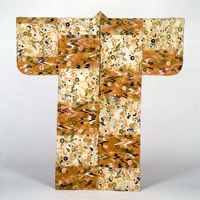
Noh Costume (Karaori) with Lozenges, Paulownia, Chrysanthemums, and Cherry Trees, Formerly owned by the Konparu troupe, Nara, Azuchi-Momoyama period, 16th century
Japanese Gallery (Honkan) Room 9
June 29, 2021 (Tue) - August 22, 2021 (Sun)Karaori literally means “Chinese-style fabric”, but these costumes, made of twill fabric, were actually first produced in Japan around the mid-16th century. Within several decades, noh actors started to use them as outer robes when performing female roles, and about a century later, during the Genroku era (1688–1704), karaori with gold-foil thread, known as “GoldenKaraori,” became popular. By viewing these karaori costumes, we can enjoy the elegant patterns and high technical ability of Japanese artisans of the Edo period (1603–1868).
| Designation | Name | Creation/ Excavation/ Provenance |
Period | Acquisition/ Ownership/ Accession Number |
CMT | ||
| Highlight | Noh Costume ("Karaori") with Lozenges, Paulownia, Chrysanthemums, and Cherry Trees | Formerly owned by the Konparu troupe, Nara | Azuchi-Momoyama period, 16th century | I-3202 | |||
| Highlight | Noh Costume ("Karaori") with Floral Vines and Linked Diamonds | Edo period, 17th century | I-4281 | ||||
| Highlight | Noh Costume ("Karaori") with Tiles, Chrysanthemums, and Eulalia Grass | Formerly owned by the Uesugi Family | Edo period, 18th century | I-3197 | |||
| Noh Costume ("Karaori") with Checkers and Chrysanthemum Branches | Formerly owned by the Uesugi Family | Edo period, 18th century | I-2862 |