


おひなさまと日本の人形
-
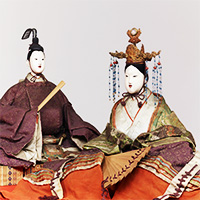
古今雛(部分) 末吉石舟作 江戸時代・文政10年(1827) 山本米子氏寄贈
本館 14室
2016年3月1日(火) ~ 2016年4月10日(日)3月3日は桃の節供。雛祭にちなんで恒例となった特集を行います。今回は当館の雛人形を代表する古今雛(山本米子氏寄贈)と牙首雛(三谷てい氏寄贈)、またこれらに本来付属する作品ながら、これまで展示されなかった官女雛の優品と紫震殿(御殿飾り)を中心に展示します。また天児・這子や紙雛にはじまる雛人形の発展を概観します。一方、日本の人形文化を代表するものとして御所人形の名品も一同に展示し、繊細で美しく、そしてかわいらしいものを尊び、高い技術を駆使して作品を作り上げてきた日本の美意識を、華やかに楽しく伝えいたします。
| 指定 | 名称 | 員数 | 作者・出土・伝来 | 時代・年代世紀 | 所蔵者・寄贈者・列品番号 | 備考 | |
| 紫檀象牙細工蒔絵雛道具 | 1棹 | 江戸時代・嘉永3年(1850)頃 | 三谷てい氏寄贈 I-1954 | ||||
| 紫檀象牙細工蒔絵雛道具 | 1棹 | 江戸時代・嘉永3年(1850)頃 | 三谷てい氏寄贈 I-1955 | ||||
| 紫檀象牙細工蒔絵雛道具 | 1棹 | 江戸時代・嘉永3年(1850)頃 | 三谷てい氏寄贈 I-1956 | ||||
| 紫檀象牙細工蒔絵雛道具 | 1組 | 江戸時代・嘉永3年(1850)頃 | 三谷てい氏寄贈 I-1957 | ||||
| 雛道具 ギヤマンコップ | 1個 | 江戸時代・嘉永3年(1850)頃 | 三谷てい氏寄贈 I-1960 | ||||
| おすすめ | 古今雛 | 1対 | 末吉石舟作 | 江戸時代・文政10年(1827) | 山本米子氏寄贈 I-1893 | ||
| おすすめ | 三人官女 | 1組 | 末吉石舟作 | 江戸時代・文政10年(1827) | 山本米子氏寄贈 I-1894 | ||
| 雛道具 駕籠 | 1挺 | 江戸時代・文政10年(1827) 頃 | 山本米子氏寄贈 I-1904 | ||||
| 雛道具 爪折傘 | 1本 | 江戸時代・文政10年(1827) 頃 | 山本米子氏寄贈 I-1908 | ||||
| 雛道具 薙刀 | 1振 | 江戸時代・文政10年(1827) 頃 | 山本米子氏寄贈 I-1909 | ||||
| 梨地蒔絵雛道具 | 1具 | 江戸時代・文政10年(1827) 頃 | 山本米子氏寄贈 I-1910 | ||||
| 梨地蒔絵雛道具 | 1基 | 江戸時代・文政10年(1827) 頃 | 山本米子氏寄贈 I-1911 | ||||
| 犬筥 | 1組 | 江戸時代・19世紀 | I-1490 | ||||
| 天児 | 1躯 | 江戸時代・19世紀 | I-1634 | ||||
| 這子 | 1躯 | 江戸時代・18~19世紀 | I-1555 | ||||
| 古式立雛 | 1対 | 江戸時代・17~18世紀 | I-1556 | ||||
| おすすめ | 立雛(次郎左衛門頭) | 1対 | 江戸時代・18~19世紀 | I-1635 | |||
| 古式次郎左衛門雛 | 1対 | 江戸時代・17~18世紀 | 昭和二十六年八月三十日 澁澤貞子ヨリ金七仟円購入 I-3350 | ||||
| 元禄雛(古式享保雛) | 1対 | 江戸時代・17~18世紀 | I-1557 | ||||
| 内裏雛(賀茂人形) | 1対 | 江戸時代・19世紀 | I-1553 | ||||
| 五人囃子(賀茂人形) | 1組 | 江戸時代・19世紀 | I-2191 | ||||
| 大坂雛 | 1対 | 江戸時代・19世紀 | 西澤昂一氏寄贈 I-1773 | ||||
| 土製室町雛 | 1対 | 三浦乾也作 | 江戸~明治時代・19世紀 | I-1552 | |||
| 四季花鳥図雛屏風 | 6曲1双 | 江戸時代・19世紀 | I-1475 | ||||
| 犬筥 | 1組 | 江戸時代・19世紀 | 高橋しな子氏寄贈 I-2763 | ||||
| 梅枝文蒔絵雛道具 | 1棹 | 江戸時代・文政10年(1827) 頃 | 山本米子氏寄贈 I-1901 | ||||
| 梅枝文蒔絵雛道具 | 2棹 | 江戸時代・文政10年(1827) 頃 | 山本米子氏寄贈 I-1902 | ||||
| 梅枝文蒔絵雛道具 | 2棹 | 江戸時代・文政10年(1827) 頃 | 山本米子氏寄贈 I-1903 | ||||
| 三つ葉葵紋蒔絵雛道具 | 1式 | 出雲松江藩松平家伝来 | 江戸時代・19世紀 | 松平直亮氏寄贈 I-1889 | |||
| 御所人形 見立て鶴亀 | 1躯 | 江戸時代・19世紀 | I-3330 | ||||
| 御所人形 見立て鶴亀 | 1組 | 江戸時代・19世紀 | I-3331 | ||||
| おすすめ | 御所人形 | 1躯 | 江戸時代・19世紀 | I-3492 | |||
| 御所人形 | 1躯 | 江戸時代・19世紀 | I-3574 | ||||
| 御所人形 立子(町人姿) | 1躯 | 江戸時代・19世紀 | I-3577 | ||||
| 御所人形 立子 | 1躯 | 江戸時代・19世紀 | I-3578 | ||||
| 御所人形 三人立子 | 1組 | 江戸時代・19世紀 | I-3581 | ||||
| 御所人形 つくね | 1躯 | 江戸時代・19世紀 | I-2181 | ||||
| 御所人形 つくね | 1躯 | 江戸時代・19世紀 | H-3352 | ||||
| 御所人形 つくね | 1躯 | 江戸時代・19世紀 | 尾竹越堂氏寄贈 H-3472 | ||||
| おすすめ | 牙首雛 | 1対 | 江戸時代・嘉永3年(1850)頃 | 三谷てい氏寄贈 I-1928 | |||
| 牙首雛 | 1対 | 江戸時代・嘉永3年(1850)頃 | 三谷てい氏寄贈 I-1929 | ||||
| 牙首雛 | 1組 | 江戸時代・嘉永3年(1850)頃 | 三谷てい氏寄贈 I-1930 | ||||
| 牙首雛 | 1対 | 江戸時代・嘉永3年(1850)頃 | 三谷てい氏寄贈 I-1931 | ||||
| 牙首雛 | 1対 | 江戸時代・嘉永3年(1850)頃 | 三谷てい氏寄贈 I-1932 | ||||
| 牙首雛 | 1対 | 江戸時代・嘉永3年(1850)頃 | 三谷てい氏寄贈 I-1933 | ||||
| 牙首雛 | 1組 | 江戸時代・嘉永3年(1850)頃 | 三谷てい氏寄贈 I-1934 | ||||
| おすすめ | 紫宸殿(雛用御殿) | 1棟 | 江戸時代・嘉永3年(1850)頃 | 三谷てい氏寄贈 I-4363 | |||
| 奈良人形 翁 | 1組 | 江戸時代・嘉永3年(1850)頃 | 三谷てい氏寄贈 I-1936 | ||||
| 雛屏風 龍虎図 | 6曲1双 | 江戸時代・嘉永3年(1850)頃 | 三谷てい氏寄贈 I-1953 | ||||
| 立雛 | 1対 | 江戸時代・嘉永3年(1850)頃 | 三谷てい氏寄贈 I-1935 | ||||
| 三折れ人形 | 1躯 | 江戸時代・嘉永3年(1850)頃 | 三谷てい氏寄贈 I-4362 | ||||
| 雛道具 台付重箱 | 1具 | 江戸時代・嘉永3年(1850)頃 | 三谷てい氏寄贈 I-1943 | ||||
| 雛道具 高坏 | 1対 | 江戸時代・嘉永3年(1850)頃 | 三谷てい氏寄贈 I-1944 | ||||
| 雛道具 蒔絵徳利 | 1対 | 江戸時代・嘉永3年(1850)頃 | 三谷てい氏寄贈 I-1945 | ||||
| 雛道具 | 5客 | 江戸時代・嘉永3年(1850)頃 | 三谷てい氏寄贈 I-1950 | ||||
| 雛道具 | 1個 | 江戸時代・嘉永3年(1850)頃 | 三谷てい氏寄贈 I-1952 |