


Ukiyo-e and Fashion in the Edo Period: Ukiyo-e
-
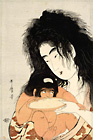
Yamanba and Kintaro: Sake Cup, By Kitagawa Utamaro, Edo period, 18th century (Important Art Object)
Japanese Gallery (Honkan) Room 10
April 23, 2013 (Tue) - May 19, 2013 (Sun)Ukiyo-e, or depictions of everyday life in the Edo period (1603 - 1868), initially developed in the early Edo period as paintings by artists. After this, woodblock printing developed to enable the mass production of ukiyo-e, and innovative carving and printing techniques led to the accomplishment of multicolored nishiki-e prints. This exhibition focuses on works portraying Zhong Kui, a figure in Chinese mythology, as well as prints on the theme of the Boys’ Festival (currently celebrated as Children’s Day on May 5), including depictions of Kintaro (a strong boy found in ancient tales) by Torii Kiyonaga, Kitagawa Utamaro, and Katsushika Hokusai. There are works with seasonal features as well, such as wisteria and irises. Also on display are a bijinga portrait of a beautiful woman by Kaigetsudo Ando, and paintings with heroic themes.
Exhibit includes:
One Hundred Famous Places of Edo: Kameido Tenjin Shrine, By Utagawa Hiroshige, Edo period, 19th century
Fight between Tatsugoro, a Fireman of the Me Squad and Daihachi, a Sumo Wrestler, By Toyohara Kunichika, Meiji era, 19th century
Yamanba and Kintaro: Sake Cup, By Kitagawa Utamaro, Edo period, 18th century (Important Art Object)