


Modern Decorative Arts
-
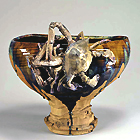
Footed Bowl, With applied crabs and brown glaze, By Miyagawa Kozan I, 1881 (Important Cultural Property)
Japanese Gallery (Honkan) Room 19
May 8, 2012 (Tue) - July 16, 2012 (Mon)The decorative arts of the Edo period (1603-1868) lost much of their support in the major social changes brought by the Meiji Restoration of 1868, meaning artisans were forced to apply their skills in new forms. In this situation, the Meiji government promulgated national policies to invigorate industry and exports, and strived to protect traditional decorative arts. The Tokyo National Museum collection includes many representative examples of modern decorative arts, including works exhibited at Japan's national industrial exhibitions and at world expositions, as well as pieces by artists attached to the Imperial Court. The exceptional works on display have been selected from the fields of ceramics, lacquerware, metalwork, and cloisonne, to show aspects of decorative arts in the Meiji era (1868-1912).
Current exhibit includes:
Footed Bowl, With applied crabs and brown glaze, By Miyagawa Kozan I, 1881 (Important Cultural Property)
Cosmetic Box, Wisteria and peony design in maki-e lacquer, By Kawanobe Itcho, Meiji era, 19th century
Eagle, By Suzuki Chokichi, 1892 (Important Cultural Property)