


The Dawn of Japanese Art: Jomon, Yayoi and Kofun periods
-
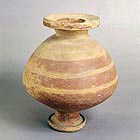
Footed Jar, From Takakura-cho, Atsuta-ku, Nagoya-shi, Aichi, Yayoi Period, 1st - 3rd century (Important Cultural Property, Gift of Mr. Tokugawa Yorisada)
Japanese Gallery (Honkan) Room 1
May 8, 2012 (Tue) - November 4, 2012 (Sun)The Jomon culture began around 12,000 years ago. Earthenware vessels of this age with various motifs and styles are the starting point of "Highlights of Japanese Art." In the Yayoi period (450 B.C.- A.D. 250), pottery with a simplistic yet refined beauty and dotaku bell-shaped bronzes were prominent. Typical objects from the Kofun period (A.D. 250-600), such as haji, sue wares and haniwa figurines, as well as mirrors, arms and armor, saddlery, and accessory, which expresses the essence of metal and glass craftsmanship, are also featured.
Current exhibit includes:
Deep Bowl with Flame-like Ornamentation, Attributed provenance: Umataka, Nagaoka-shi, Niigata, Jomon period, 3000 - 2000 BC
Dotaku (Bell-shaped bronze), From Kashio Yubune, Iga-shi, Mie, Yayoi period, 1st - 3rd century
Haniwa (Terracotta tomb ornament), House with a hipped and gabled roof, From Imai, Isesaki-shi, Gunma, Kofun period, 6th century
Deep Bowl, From Horinouchi Shellmound, Ichikawa-shi, Chiba, Jomon period, 2000 - 1000 BC (Private collection)
Footed Jar, From Takakura, Atsuta, Nagoya-shi, Aichi, Yayoi period, 1st - 3rd century (Important Cultural Property, Gift of Mr. Tokugawa Yorisada)
Mirror, Interconnected arcs design, From Shorinzan Tumulus, Iwata-shi, Shizuoka, Kofun period, 4th century
Footed Jar with Ornaments and Diminutives, Sue stoneware, From Ogasayama, Osafune-cho, Setouchi-shi, Okayama, Kofun period, 6th century