Chinese Buddhist Sculpture
1st floor Room 1
June 24, 2020 (Wed) -
April 18, 2021 (Sun)

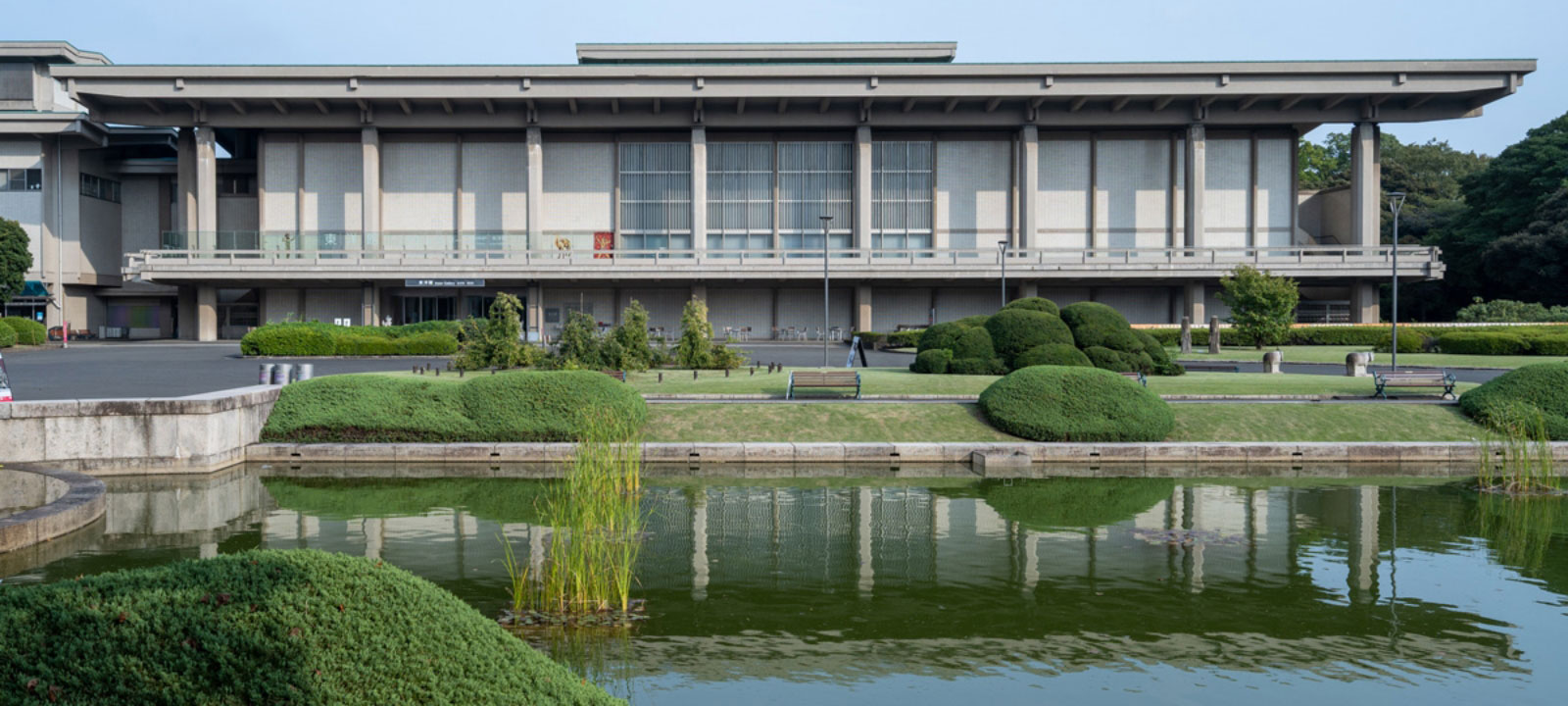
The galleries feature art and artifacts from regions including China, Korea, Southeast Asia, Central Asia, India, and Egypt.
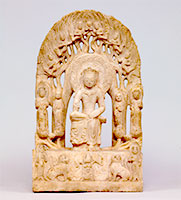
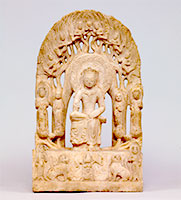
Standing Buddha Triad, Eastern Wei dynasty, 6th century (Important Cultural Property)
1st floor Room 1
June 24, 2020 (Wed) - April 18, 2021 (Sun)
This section mainly features stone or gilt bronze Buddhist statues from about the 6th to the 8th century. The statues on display present the exquisite form of sculptures from the golden era of Buddhist statues in China.
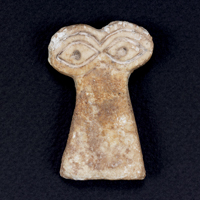
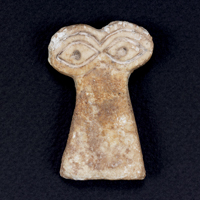
Eye Idol, Excavated at Tell Brak, Syria. Late Chalcolithic 3 Period, ca. 3800-3600 BC (Gift of Dr. Furusawa Shizuko)
2nd floor Room 3
January 26, 2021 (Tue) - April 18, 2021 (Sun)
This part introduces artifacts from West Asia and Egypt, known as the cradle of the earliest civilizations.
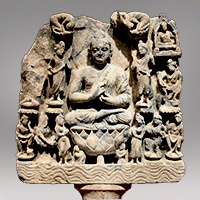
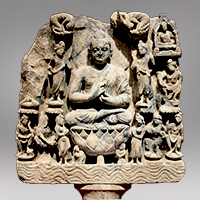
Preaching Buddha, Kushan dynasty, 3rd century
2nd floor Room 3
June 24, 2020 (Wed) - June 27, 2021 (Sun)
This part mainly features Buddhist statues from Gandhara (northwestern Pakistan) and Mathura (northern, central India) from the 2nd to the 5th century. The wide variety of sculptures on display is a notable feature.
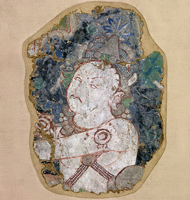
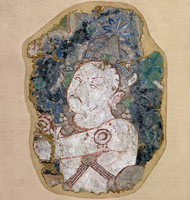
Buddhist Deity, Kizil Caves, China, Ōtani collection, Tang dynasty, 7th century
2nd floor Room 3
March 23, 2021 (Tue) - May 9, 2021 (Sun)
This part introduces art of the Western Regions (Central Asia) from about the 1st to the 10th century, with a focus on Buddhist art. The highlight of this part is the rich variety of works with high artistic and historical significance.
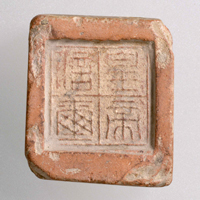
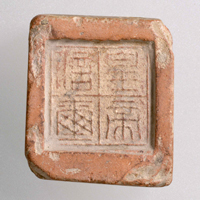
Seal with the Inscription "True Seal of the Emperor", China, Qin–Western Han dynasty, 3rd–2nd century BC (Gift of Mr. Abe Fusajirō)
3rd floor Room 4
January 26, 2021 (Tue) - May 16, 2021 (Sun)
This gallery focuses on pottery and jade objects from about 3000 BC to AD 200. The items on display present the beauty that ancient Chinese people pursued in the form and color of pottery, as well as the characteristic luster of jade.
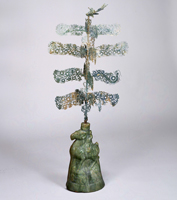
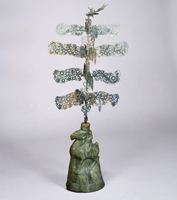
Money Tree, Excavated in Sichuan province or its vicinity, China, Eastern Han dynasty, 1st-2nd century
3rd floor Room 5
March 9, 2021 (Tue) - June 27, 2021 (Sun)
This gallery focuses on Chinese bronzes from about 1,800 BC to 1,000 AD. The changing shapes and designs of the bronzes on display provide clues to the thoughts and shifting religious beliefs of the ancient Chinese people.
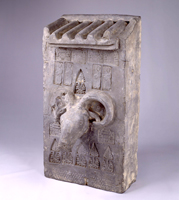
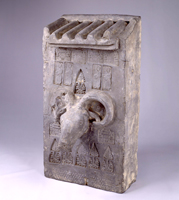
Tomb Entrance Tile with a Sheep's Head, Reportedly found near Xingyang County, Henan Province, China, Western Han–Eastern Han dynasty, 1st century BC–2nd century AD
3rd floor Room 5
February 23, 2021 (Tue) - June 27, 2021 (Sun)
This gallery introduces burial goods from about the 2nd century BC to the 8th century AD. During this period, the aristocracy and ruling elites were buried in tomb mounds along with numerous items meant to ensure their comfort in the next life, such as miniature models of daily goods (mingqi) and tomb figures shaped like servants or other people to care for them after death. The miniature models are often related to livestock or agriculture and give clues about the dietary practices of people living during this period. Visitors will also have the opportunity to see tomb figures from the Han dynasty (206 BC–220 AD) and earthenware decorated in the renowned "three-color glaze" (sancai) of the Tang dynasty (618–907).
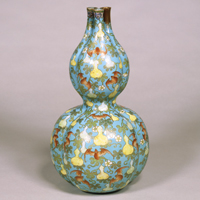
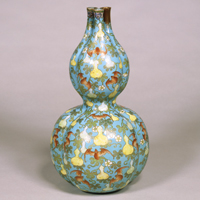
Gourd-Shaped Vase with Bats and Gourds, Porcelain with overglaze famille rose enamel
Jingdezhen ware, China, Qing dynasty, Qianlong era (Gift of Dr. Yokogawa Tamisuke)
3rd floor Room 5
March 23, 2021 (Tue) - June 13, 2021 (Sun)
This gallery presents the changing expressions of Chinese ceramics from the 7th to the 19th century.
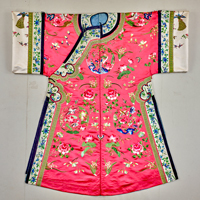
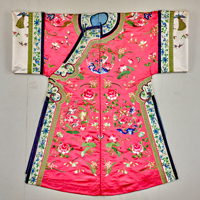
Robe (Pao) with Flowering Plants Satin-weave silk with embroidery, China, Qing dynasty, 19th century
3rd floor Room 5
February 2, 2021 (Tue) - April 25, 2021 (Sun)
Embroidery refers to a decorative technique that uses a needle and thread to add designs to textiles. The texture and depth of the designs can be controlled to a surprising degree by using different techniques in combination with each other, as seen in the works on display.
Along with embroidery, this exhibition also currently features a robe, called a pao, made using a silk tapestry weave, called kesi.
Visitors are invited to look and compare the different designs achieved through these techniques while also enjoying a taste of the ornate textiles of the Ming (1368–1644) and Qing (1644–1912) dynasties.
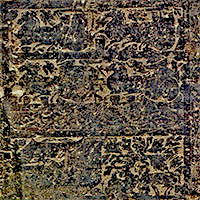
Stone Bas-relief, Procession of chariots / Building for ancestral rituals (detail), From Xiaotangshan, Shandong province, China, Eastern Han dynasty, 1st–2nd century
4th floor Room 7
April 6, 2021 (Tue) - April 10, 2022 (Sun)
In the 2nd century BC, Chinese tombs were not simply holes in the ground. They developed to have walls and ceilings, with a structure almost like underground mansions. Tombs also appeared that had shrines built above ground for the bereaved families to perform rituals. Particularly in Shandong province and southern Henan province, sturdy stone was favored for making the tombs and shrines, with the stone surfaces used for carving images. Many of these stone bas-reliefs were created until the second half of the 2nd century in the Eastern Han dynasty.
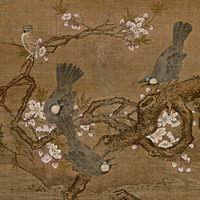
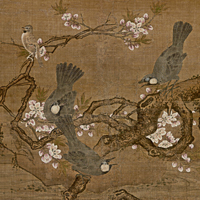
Flowers and Birds of the Four Seasons (detail), By Lu Ji, Ming dynasty, 15th–16th century (Important Cultural Property)
4th floor Room 8
March 2, 2021 (Tue) - April 11, 2021 (Sun)
This exhibition introduces paintings of the Ming dynasty court and the Zhe school, together with related works of calligraphy.
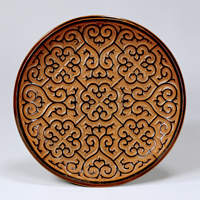
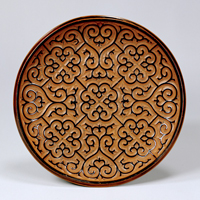
Tray with Pommel Scrolls, Wood with carved marbled lacquer, Southern Song dynasty, 12th–13th century, (Gift of Mr. and Mrs. Arthur M. Sackler)
5th floor Room 9
March 16, 2021 (Tue) - June 6, 2021 (Sun)
Lacquer is the sap of the lacquer tree, which grows in East and Southeast Asia. Naturally sticky, it can be brushed onto different materials, and hardens into a durable coating that is waterproof and resistant to acids, alkalis, and heat.
The history of lacquerware in China dates back to the Neolithic period. Over the past 7,000 years, a number of ornate decorative techniques have grown out of Chinese innovations, including: built-up layers of lacquer that are then carved, mother-of-pearl inlay, incised lines of gold, and a special type of decorative inlay made up of different colors of lacquer and outlined in incised lines.
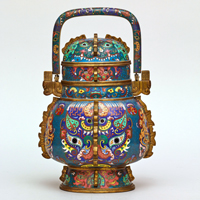
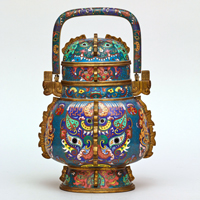
Wine Vessel (You) with Animal Masks (Taotie), China, Qing dynasty, 19th century (Gift of Mr. Kamiya Denbei)
5th floor Room 9
March 16, 2021 (Tue) - June 6, 2021 (Sun)
This gallery introduces the decorative art of the Qing dynasty (1644–1912) in China, such as works of jade, cloisonne, glass, and bamboo. The items on display feature the beauty of fine technical skill and the sophisticated atmosphere of Qing–dynasty decorative art.
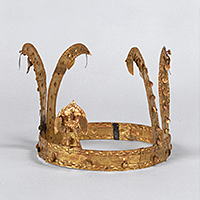
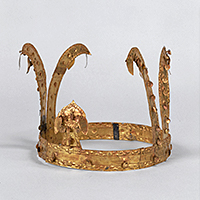
Crown, Attributed provenance: Gyeongsangnam-do, Korea, Three Kingdoms period (Gaya), 5th century (Important Art Object)
5th floor Room 10
October 20, 2020 (Tue) - April 25, 2021 (Sun)
This part highlights Korean polished stone tools and metal objects that had a great influence on Japan's Yayoi culture.
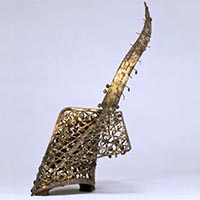
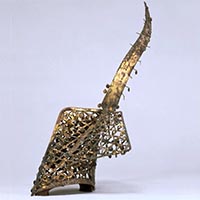
Headgear, With design in openwork, Attributed provenance: Changnyeong, Korea, Three Kingdoms period (Silla), 6th century (Important Cultural Property)
5th floor Room 10
October 20, 2020 (Tue) - April 25, 2021 (Sun)
This gallery presents artifacts from Korea’s Three Kingdoms period (57 BC–668 AD), an era when powerful rulers vied for control of the Korean Peninsula. The three kingdoms were comprised of Goguryeo in the north, Baekje in the southwest, and Silla in the southeast. A fourth state, known as the Gaya confederacy, also existed in the south before being annexed by Silla.
Each region made full use of the materials of the time—namely, gold, silver, bronze, iron, glass, and jade—to create distinct ornaments and other objects including, armor, horse tack, clay tiles, and pottery.
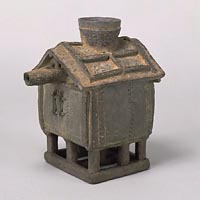
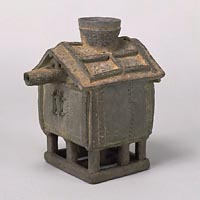
House-Shaped Vessel, Three Kingdoms period (Silla), 5th–6th century (Important Art Object)
5th floor Room 10
October 20, 2020 (Tue) - April 25, 2021 (Sun)
This gallery introduces Korean ceramics from the Proto–Three Kingdoms period (1st century BC–3rd century AD) to the Joseon dynasty(1392–1910).
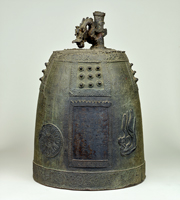
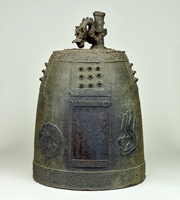
Buddhist Temple Bell, Goryeo dynasty, 1196 (Gift of The Ogura Foundation)
5th floor Room 10
April 6, 2021 (Tue) - September 20, 2021 (Mon)
This gallery features the essence of Korean Buddhist art.
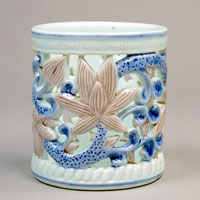
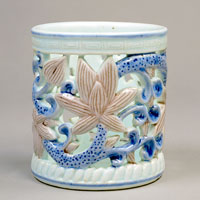
Brush Stand, Korea, Joseon dynasty, 19th–20th century
5th floor Room 10
April 6, 2021 (Tue) - June 27, 2021 (Sun)
This gallery features Korean furniture, clothing, and room decor from the Joseon dynasty (1392–1910). While the costumes, furniture, tableware, and stationery each possessed individual beauty, their appeal was enhanced by their placement in living spaces.
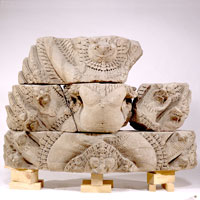
Basement Room 11
June 24, 2020 (Wed) - May 9, 2021 (Sun)
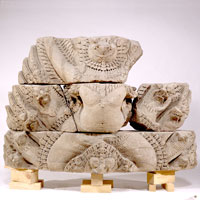
This section introduces sculptures from Khmer, with a focus on stone statues from the Angkor period (9th-13th century). The Tokyo National Museum collection of Khmer sculptures, which are distinguished in both quality and quantity, was acquired in 1944 through an exchange project with the research institute l'École francaise d'Extrême-Orient.
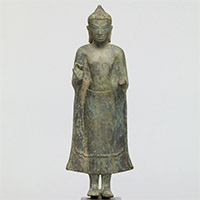
Standing Buddha, varavati period, 7th-8th century
Basement Room 12
June 24, 2020 (Wed) - May 9, 2021 (Sun)
This part focuses on Southeast Asian gilt bronze statues of gods and Buddhist deities from the 7th to 13th century. The statues are made using the lost–wax casting process, and therefore they have common qualities in their plasticity and smoothness of form.
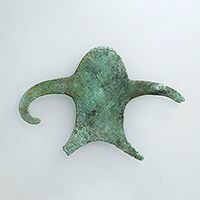
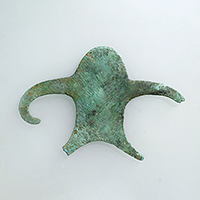
Human-shaped Object, Attributed provenance: Uttar Pradesh, India, Copper Hoard culture, ca. 1500 BC
Basement Room 12
June 24, 2020 (Wed) - April 25, 2021 (Sun)
The excavated pottery and metal wares exhibited in this part clearly show the prosperity of cultures with rich regional characteristics in ancient India and Southeast Asia.
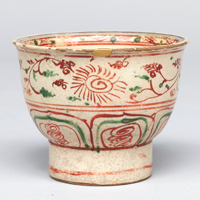
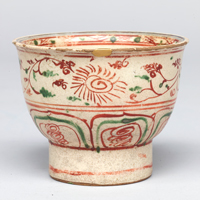
BowlArabesque design in overglaze enamel, Formerly owned by Okano Shigezo, 16th century (Important Art Object)
Basement Room 12
January 13, 2021 (Wed) - May 9, 2021 (Sun)
This part introduces the individual styles of ceramics made in Cambodia, Thailand, and Vietnam from the 9th to the 16th century.
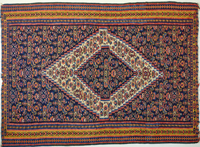
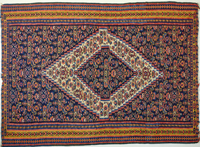
Carpet with Nested Diamonds and Abstract DesignsTapestry-weave cotton and wool, Iran, First half of 20th century
Basement Room 13
February 2, 2021 (Tue) - May 9, 2021 (Sun)
These textiles were collected by Ms. Matsushima Kiyoe, a researcher of nomadic peoples who was passionate about the nomads of West Asia. She collected these items in West Asia from the 1960s to the 1980s.
Since ancient times, nomadic people lived itinerantly together with their livestock, moving around the plateau regions that stretch from northwestern India to Pakistan, Afghanistan, and from Iran to Turkey. Without fixed places of residence, they acted as tribes. The nomads were self-sufficient in all the necessities of their daily lives, therefore their clothes, bags, sheets for tents, and other textile items were all created by spinning the wool from their livestock, or by turning woolen fibers into felt. Each tribe also developed unique designs, so that they could indicate their tribes from a distance. In today’s world, the lives of nomads have also modernized, as a result of which their culture is gradually being lost.
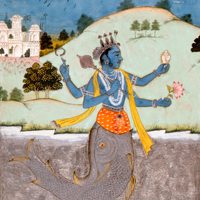
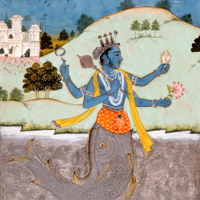
Fish Incarnation of Vishnu (Matsya Avatar) (detail), By the Bikaner school, First half of 18th century
Basement Room 13
April 6, 2021 (Tue) - May 9, 2021 (Sun)
The art of “miniature painting” is one of India’s best-known genres. These paintings use elaborate brushwork and vibrant colors to depict a variety of themes, including: Indian myths, Hindu gods, portraits of kings, scenes from history, and love stories. Miniature paintings can also be enjoyed for their distinct regional styles that reflect India’s rich history of cultural diversity.
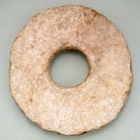
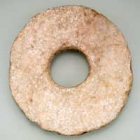
Stone Money, Yap Islands, Micronesia, Second half of 19th century (Gift of Mr. Taguchi Ukichi)
Basement Room 13
February 9, 2021 (Tue) - May 9, 2021 (Sun)
The Tokyo National Museum has a large collection of ethnographical materials from the South Pacific, mostly collected from the 19th to 20th century. During that period, the traditional beliefs and customs of South Pacific islanders were changing rapidly as they came in contact with colonial powers. Today, some of the objects in the collection can no longer be found on the islands they came from.
The current exhibition features objects related to traditional ways of life, including a model of a ceremonial house, hunting and fishing tools, musical instruments, bowls, and objects used as currency. These works offer a rare glimpse into the unique indigenous cultures of the South Pacific.