


Performing Arts Masks and Costumes in the Noh Play Momijigari
-
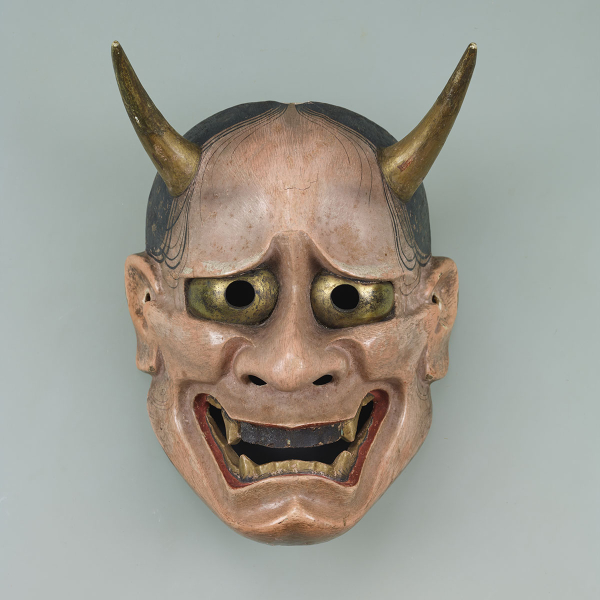
Noh Mask: Hannya
Formerly owned by the Konparu troupe, Edo period, 17th–18th century (Important Cultural Property)Japanese Gallery (Honkan) Room19
September 15, 2026 (Tue) - November 29, 2026 (Sun)The Noh play Momijigari ("Viewing the Autumn Foliage") tells the story of a samurai's encounter with a man-eating demoness. In the first half, a noblewoman ventures into the mountains with her attendants to view the autumn foliage. There she meets the samurai Taira no Koremochi, who is out hunting with his entourage. She invites him to drink and beguiles him with an elegant dance. Koremochi, lulled by wine and beauty, falls asleep drunk.
In the second half, he awakens to find the noblewoman transformed into her true form: a demoness who preys on travelers in these mountains. She attacks him, but Koremochi draws his sword — a divine weapon he received from a Shinto god — and cuts her down after a fierce struggle.
This exhibition features masks and costumes worn by actors in this play. These include a manbi mask depicting the young noblewoman, paired with a karaori robe woven with elegant, courtly patterns. In contrast, the hannya demon mask on display has uptured eyes and a gaping mouth embodying rage and torment.
| Designation | Name | Creation/ Excavation/ Provenance |
Period | Acquisition/ Ownership/ Accession Number |
CMT | ||
| Highlight | Important Cultural Property | Noh Mask: Hannya | Formerly owned by the Konparu troupe | Edo period, 17th–18th century | C-1554 | ||
| Highlight | Noh Costume (Karaori) with Bamboo Curtains, Poem Cards, and Bush Clovers | Passed down by the Uesugi clan | Edo period, 18th century | I-2005 | |||
| Highlight | Noh Costume (Karaori) with Huts, Autumn Grasses, and Pines | Edo period, 18th century | I-2006 | ||||
| Highlight | Noh Costume (Karaori) with Hall Crabapples and Baskets | Passed down by the Uesugi clan | Edo period, 18th century | I-2016 | |||
| Highlight | Noh Costume (Karaori) with Floral Linked Diamonds | Edo period, 17th century | I-4301 |