


Daily Tools of the Yayoi Period
-
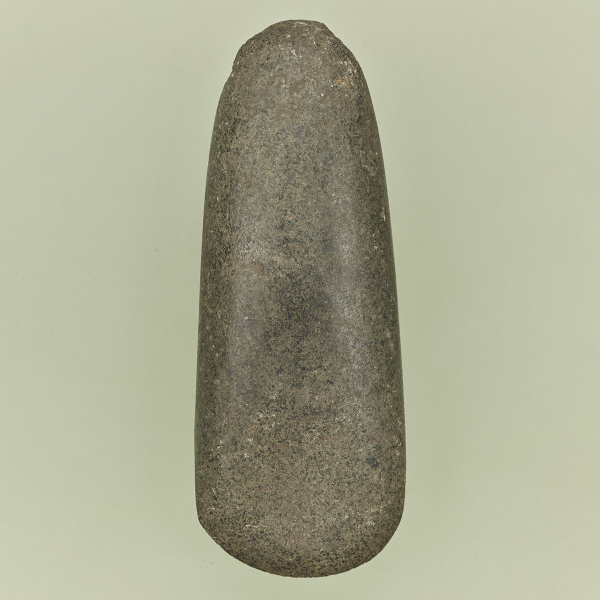
Polished Axe
Found from Tenryū River, Nagano, Yayoi period, 2nd–1st century BCJapanese Archaeology and Special Exhibition (Heiseikan) Japanese Archaeology Gallery
September 8, 2026 (Tue) - March 14, 2027 (Sun)In the Yayoi period (ca. 5th century BC–3rd century AD), polished stone and metal tools were introduced from China and the Korean Peninsula along with wet rice cultivation. Stone tools included rice reapers for harvesting, a range of polished axes and adzes for making wooden agricultural tools, and polished arrowheads that could have been used as weapons. These tools were subsequently made with iron.
| Designation | Name | Creation/ Excavation/ Provenance |
Period | Acquisition/ Ownership/ Accession Number |
CMT | ||
| Highlight | Clog Used in Rice Paddies | Found at the Sena Site, Shizuoka | Yayoi period, 2nd century BC–3rd century AD | Lent by Shizuoka Prefecture | |||
| Highlight | Polished Axe | Found from Tenryū River, Nagano | Yayoi period, 2nd–1st century BC | J-7323 | |||
| Highlight | Reaping Knives | Found at the Bishamon Cave C, Kanagawa | Yayoi period, 1st–3rd century | J-37003-9 | |||
| Highlight | Octopus Trap | Found at the Yotsuike Site, Osaka | Yayoi period, 2nd century BC–3rd century AD | Gift of Mr. Maeda Chozaburo, J-10068 |