Treasures from Sacred Izumo: On the Occasion of the Renovation of Izumo Taisha Shrine and 1300 Years of the Kojiki Chronicle
Honkan Room T5 & T4
October 10, 2012 (Wed) - November 25, 2012 (Sun)
Izumo is a land of myths and legends, and is a place where the gods and deities from across Japan gather in autumn. Many precious artifacts still remain in this land, including the immense amount of bronzes found at the Kojindani and Kamoiwakura sites, and a sacred column (uzubashira) excavated from the premises of Izumo Ōyashiro. This column brings to us the image of a grand shrine building, and entices us to the world of myths.
This year marks the 1300th year of the compilation of the Kojiki, which records mythical legends related to Izumo. In addition, next year is the year for the shrine to be rebuilt and renewed after a period of 60 years. On the occation of these events, this exhibition introduces the sacred land of Izumo through precious cultural assets, beginning with the sacred column (uzubashira) and other treasures of the Izumo Ōyashiro, as well as a designated National Treasure bronze sword, halberds, dotaku bells, arms and armor, swords, and representations of deities.
General Information |
|||||||||
| Period | Wednesday, October 10 - Sunday, November 25, 2012 | ||||||||
| Venue | Honkan Room T5&T4, Tokyo National Museum (Ueno Park) | ||||||||
| Hours | 9:30 - 17:00 Fridays until 20:00 until 21:00 on Saturday, October 20 (Last entry 30 minutes before closing) |
||||||||
| Closed | Mondays | ||||||||
| Admission | Adults: 800 (700) yen University students: 600 (500) yen High school students: 400 (300) yen Junior high school students and under: Free
|
||||||||
| Access | 10 minutes' walk from JR Ueno Station (Park exit) and Uguisudani Station 15 minutes' walk from Keisei Ueno Station, Tokyo Metro Ueno Station and Tokyo Metro Nezu Station |
||||||||
| Organizer | Tokyo National Museum, Shimane Prefecture, Shimane Museum of Ancient Izumo, NHK, NHK Promotions Inc., The Yomiuri Shimbun | ||||||||
| With the Support of | Agency of Cultural Affairs | ||||||||
| With the special assistance of | Izumo Ōyashiro, Association of Shinto Shrines Shimane Prefecture Office | ||||||||
| General Inquiries | 03-5405-8686 (Hello Dial) | ||||||||
| Exhibition Website | http://izumo2012.jp/ (In Japanese) The website has closed with the end of the exhibition. |
||||||||
Related Events
Highlight of the Exhibition |
I. The History and Treasures of Izumo Ōyashiro |
|
|
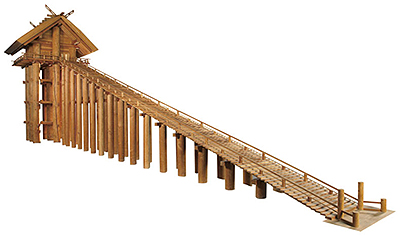
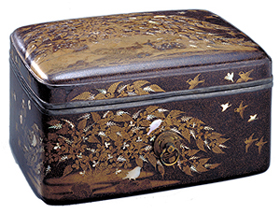
Izumo Ōyashiro (also known as Izumo Taisha Shrine) has the longest history in Japan. Its establishment can be traced back to mythological times as relate in Kojiki (The Record of Ancient Matters) and Izumo no kuni fudoki (the Record of Customs and Land of Izumo). This section explores the shrine’s history through various artifacts and artworks such as the colossal sacred column (J., uzubashira), which was excavated in 2000, and a reconstructed model of the ancient main shrine building. Other works include shrine treasures such as the National Treasure-designated Toiletry Case with Deer in Autumn, documents written to the shrine by Emperor Godaigo (1288–1339), and records and maps from the Senge and Kitajima clans, who were administrators of Izumo Province.
|
|
![]() |
Toiletry Case with Deer in Autumn Kamakura period, 13th century National Treasure Izumo Ōyashiro, Shimane (on exhibit from October 10 to November 4, 2012) |
![]() |
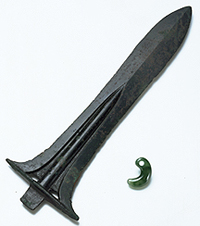
Halberd and Magatama (Comma-shaped Jewel)
Excavated from the Manai site, Shimane Prefecture Yayoi period, 2nd - 1st century BC Important Cultural Property Izumo Ōyashiro, Shimane |
![]() |
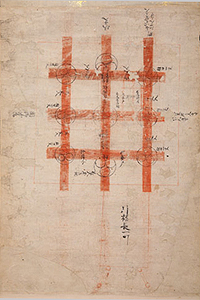
Construction Plan of Izumo Shrine Building
Kamakura to Muromachi periods, 13th - 16th century Senge Clan, Shimane (on exhibit from October 10 to November 4, 2012) |
![]() |
Reconstruction Model of Ancient Izumo Ōyashiro (Scale 1:10)
Heisei 11, 1999 Izumo City, Shimane |
![]() |
Sacred Column (J., Uzubashira) Excavated from Izumo Ōyashiro grounds, Shimane Prefecture Kamakura period, dated 1248 Important Cultural Property Izumo Ōyashiro, Shimane |

II. The Cultural Assets of Shimane |
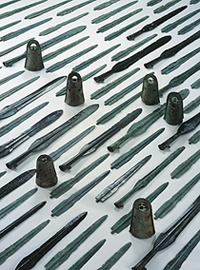
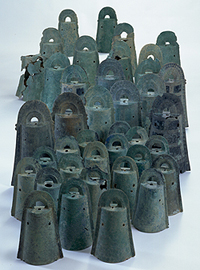
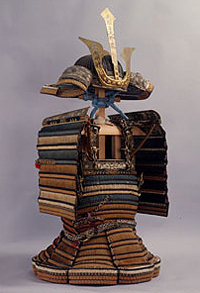
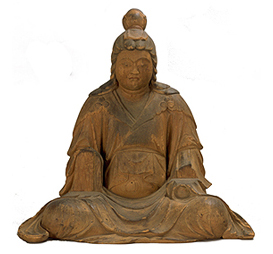
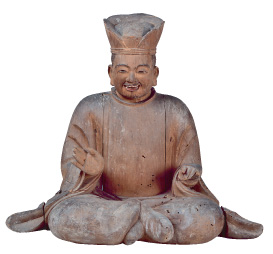
| The numerous bronze ware excavated from the Kojindani and Kamo-Iwakura ruins greatly changed the image that the Japanese held of ancient Yayoi-period (300 BC–300 AD) society. This section features seventy-nine examples of National Treasure-designated bronze objects and their reproductions, which demonstrate their original radiant state. Also, introduced here are celebrated treasures of Shinto shrines and Buddhist temples in Shimane Prefecture such as: Gakuen-ji Temple’s Important Cultural Property-designated Standing Kannon Bosatsu (Skt., Avalokitesvara Bodhisattva), which was purportedly carved in Izumo in the seventh century; statues of Shinto gods from Joso-ji Temple, Kiyomizu-dera Temple, and Akana Hachiman Shrine; Sada Shrine’s armor, which is said to have been offered by the feudal lord Amago of Izumo Province during the Warring States period (1467–1568); and the treasured sword from Susa Shrine. |
![]() |
Bronzes (Swords, Halberds, Dotaku (Ritual Bells))
Excavated from the Kojindani site, Shimane Prefecture Yayoi period, 2nd - 1st century BC National Treasure Agency for Cultural Affairs |
![]() |
Dotaku (Ritual Bells)
Excavated from the Kamo Iwakura site, Shimane Prefecture Yayoi period, 2nd - 1st century BC National Treasure Agency for Cultural Affairs |
![]() |
Domaru Armor with Variegated Cords
Muromachi period, 16th century Important Cultural Property Sada Shrine, Shimane |
![]() Seated Female Deity Himegami By Kyokaku Kamakura period, dated 1326 Important Cultural Property Akana Hachiman Shrine, Shimane |
![]() Seated Matara Deity By Kakusei Kamakura period, dated 1329 Cultural Property of Shimane Prefecture Kiyomizu-dera Temple, Shimane |
|